


How Long Does Botox Last? Duration and Influencing Factors
Neurotoxin injections can smooth frown lines, crow’s‑feet, and even migraine pain, but they aren’t permanent. Most people wonder exactly how long the effect will stick around. In this guide you’ll discover the typical lifespan of these treatments, the science behind what makes them wear off, and usable ways to stretch each session.
What Determines Treatment Duration?
When a tiny amount of botulinum toxin lands in a muscle, it blocks the nerve signal that tells the muscle to contract. The muscle relaxes, the wrinkle softens, and you get a smoother look. The block lasts until the nerve sprouts new connections and the toxin is broken down by the body. That process usually takes three to six months.
Key Takeaway:Botulinum toxin works by pausing muscle movement, and the pause ends when the body clears the toxin.
Several variables decide exactly when the pause ends. The first is the dose. More units give a bigger “pause” but don’t always stretch the timeline dramatically. A study of masseter (jaw‑line) treatments showed that even a high dose of 30 U per side only lasted about 12‑20 weeks , the same range seen with a modest 10 U forehead dose. PMCID 11116321 The second factor is the muscle’s size and strength. Larger, more active muscles (like the frontalis in the forehead) tend to bounce back sooner than smaller ones.
Age matters, too. Younger skin has more collagen and tighter muscle fibers, which can hold the toxin a bit longer. Older skin may show the return of lines sooner because the skin itself has less support.
Pro Tip:Ask your injector to assess both muscle depth and skin quality; a tailored dose can improve durability.
Sex is another hidden driver. Clinical notes often record that men, who typically have thicker facial muscles, may need a slightly higher dose to achieve the same look, yet the effect still fades in the same 3‑4‑month window. Finally, the injector’s technique , how deep the needle goes, how many injection points are used, and how evenly the toxin is spread , can add or subtract weeks.
All of these pieces combine into a simple rule: the body’s natural repair cycle, not the sheer amount of toxin, sets the clock. That’s why you’ll hear the same 12‑24‑week range pop up for many facial zones.
Average Longevity by Treatment Area
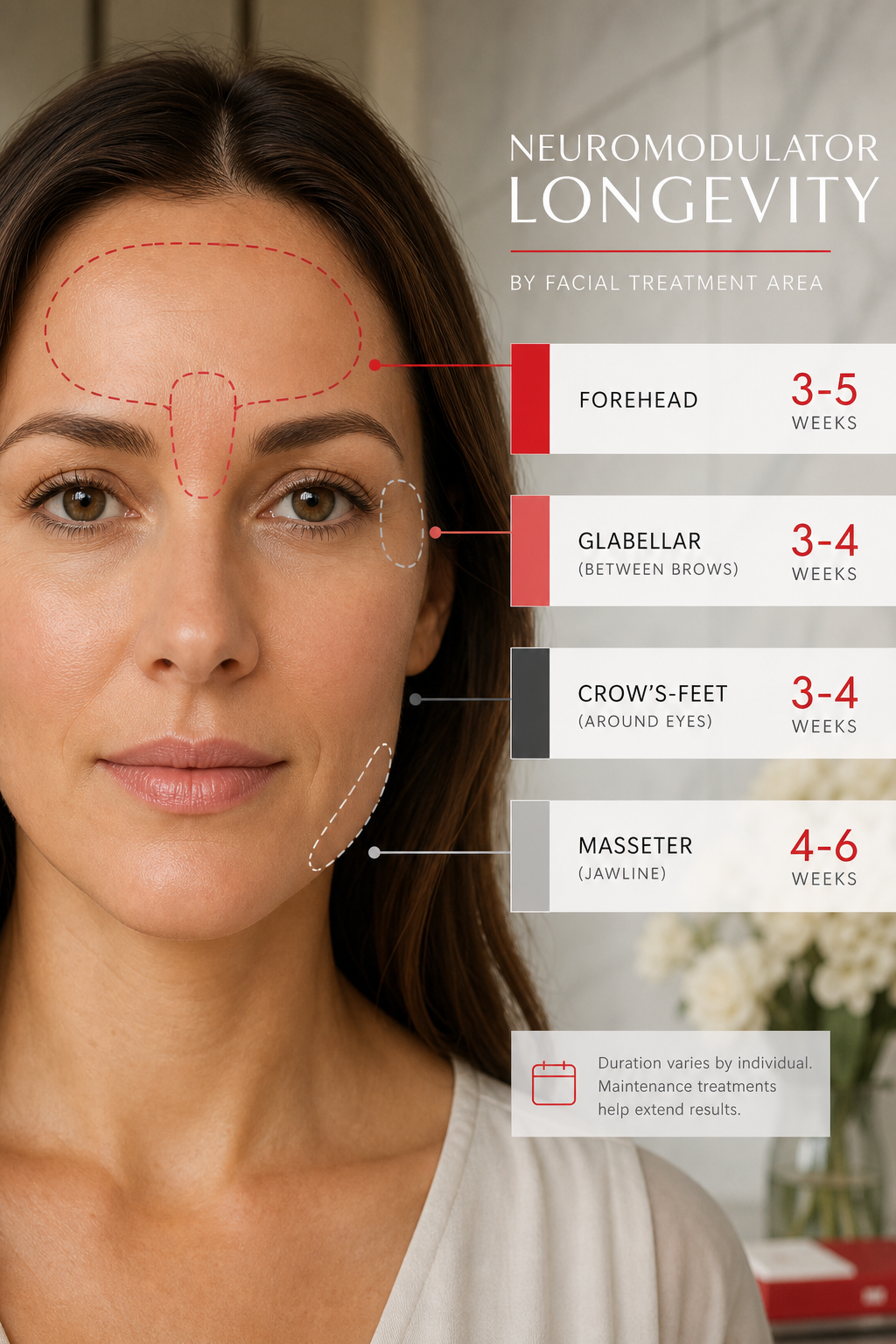
Different parts of the face move in different ways, so the toxin’s stay‑power changes a bit. Below is a quick view of the most common zones and the typical duration you can expect.
Area | Typical Units | Usual Duration | Notes |
Forehead (frontalis) | 10‑25 U | ≈12‑16 weeks | Large muscle, expressive; may need touch‑up sooner. |
Glabellar lines (frown) | 20‑63 U | ≈16‑24 weeks | Often the most consistent zone; studies report a four‑month average. |
Crow’s‑feet (orbicularis oculi) | 10‑24 U | ≈12‑20 weeks | Thin skin, fine muscle; can feel longer if placed symmetrically. |
Masseter (jaw‑line) | ≈30 U per side | ≈12‑20 weeks | Largest dosage but not a longer window. |
Procerus / corrugator | 5‑10 U | ≈12‑16 weeks | Small muscles; often paired with glabellar treatment. |
Notice how most areas cluster around the three‑month mark despite different unit counts. The pattern tells us that muscle activity and anatomy outweigh raw dosage in dictating longevity.
When you’re planning a treatment, think of the area’s everyday motion. If you raise your eyebrows a lot while reading, the forehead may need a slightly higher unit count or a tighter follow‑up schedule. If you rarely smile wide, crow’s‑feet may linger a bit longer.
For a visual snapshot, imagine a chart where each bar shows the average weeks of smoothness. That mental picture helps you set realistic expectations before you walk into the clinic.
How Metabolic Rate Affects Neuromodulator Results
Your metabolism is the engine that turns food into energy. It also decides how fast chemicals, including neuromodulators, are broken down. People with a fast metabolic rate may notice that the smoothness fades a bit quicker than those with a slower rate.
One small study of 60 women tracked activity levels and neuromodulator wear‑off. The participants who exercised intensely (three to six high‑intensity workout sessions per week) showed a shorter smooth period than the low‑activity group, even though both groups received the same dose. The researchers suggested that higher circulation and faster protein turnover could be clearing the toxin sooner. Self.com report
That doesn’t mean you must quit the gym. Moderate movement helps keep skin healthy, and the difference in weeks is often modest. What does matter is the post‑procedure window. Most doctors advise you to avoid vigorous exercise for the first 24‑48 hours. The increased blood flow right after injection could push the treatment away from the target muscle before it fully binds.
Another metabolic factor is thyroid function. An overactive thyroid can speed up overall protein metabolism, which may shave off a week or two from the effect. If you have a thyroid condition, let your injector know so they can adjust the plan.
Here’s a quick checklist to gauge how your metabolism might play a role:
Track weekly workout intensity; consider lighter sessions the week of treatment.
Ask about any thyroid medication changes.
Stay hydrated , water helps the body process toxins evenly.
Understanding these subtle links lets you schedule appointments that line up with your lifestyle, not the other way around.
Neurotoxin Injection Technique and Product Quality
Even the most skilled injector can’t cheat physics, but the right technique can keep the toxin where it belongs. Neurotoxin treatments (botulinum toxin type A) have been the benchmark for two decades, and their safety record is solid. The product is made by a trusted manufacturer and carries a long list of FDA approvals.
Pro Tip:Verify that the vial you receive is genuine neurotoxin; counterfeit products can cause unpredictable results.
Technique matters in three ways: depth, placement, and diffusion control. Depth refers to how far the needle goes beneath the skin. Too shallow and the toxin may leak into surrounding tissue, causing bruising or a droopy brow. Too deep and it might miss the target muscle, shortening the effect. Most clinicians aim for the mid‑dermal layer for facial lines.
Placement is about hitting the right muscle bundles. For the glabellar region, injecting into both the corrugator and procerus muscles creates a balanced lift. Missing one of the bundles can leave a “spider‑web” look that fades unevenly.
Diffusion control means adjusting the dilution. A more dilute solution spreads wider, which can be helpful for larger muscles like the forehead but risky for delicate areas around the eyes. That’s why some providers prefer an alternative neurotoxin for forehead work, as it spreads a bit more, but the consensus remains that the predictability of the standard neurotoxin wins out for most patients.
At PS Aesthetics Wellness + Skinbar , the team follows a strict protocol: they map each muscle, use a 30‑gauge needle, and pause for two minutes after each injection to watch for any immediate movement. This level of care reduces the chance of early wear‑off.
When you combine a high‑quality product with precise technique, the average 3‑4‑month window becomes reliable. Any deviation, whether from a rushed injector or a diluted batch, can shave weeks off the result.
Bottom line: the injector’s skill is the single biggest lever you can pull to make the treatment last as long as science allows.
Lifestyle Factors That Shorten or Extend Results
Beyond biology, everyday habits can tilt the clock one way or the other. Let’s walk through the most common lifestyle influences.
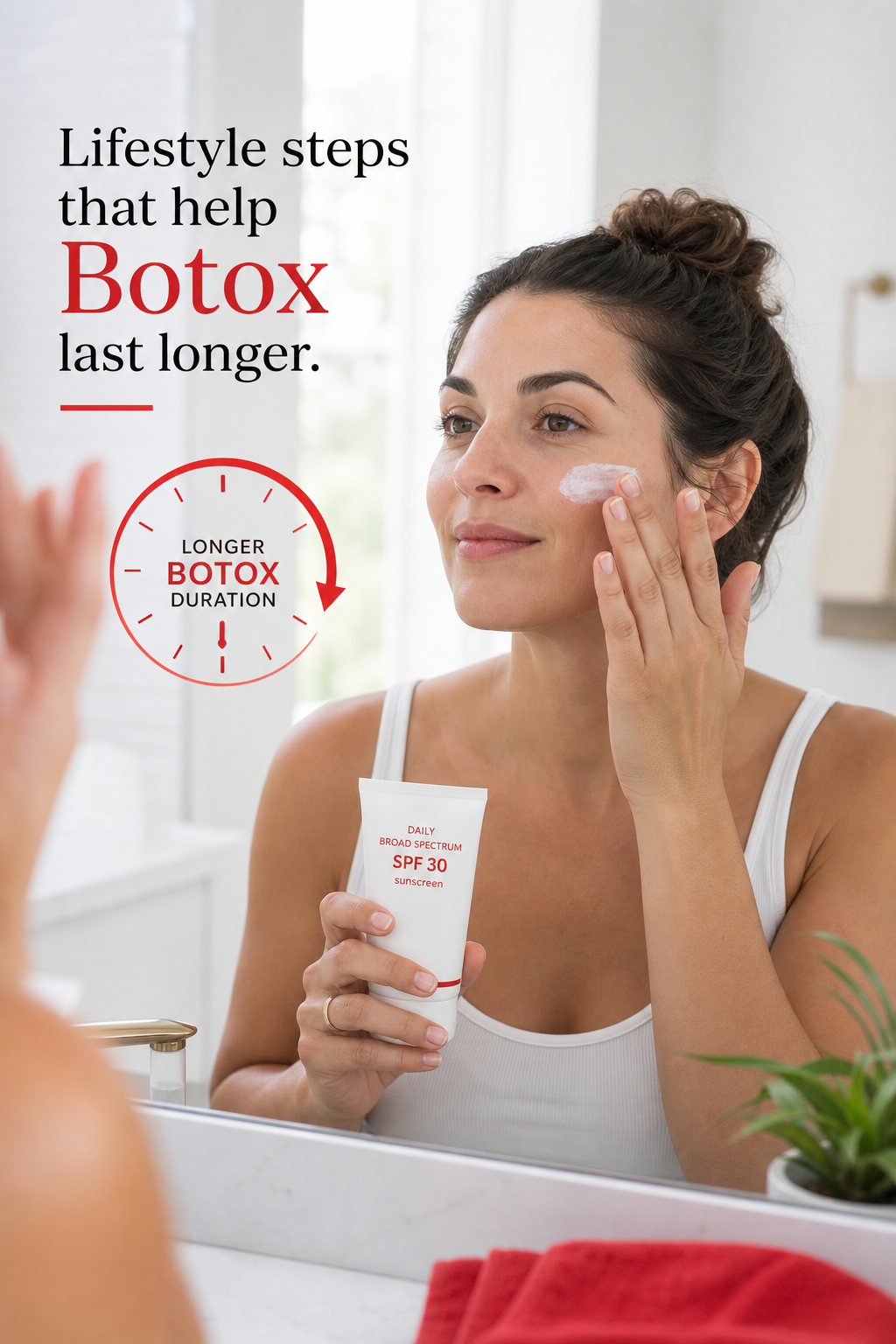
Sun exposure.UV rays break down collagen, making skin thinner. Thin skin shows lines sooner, so the visual effect of the neurotoxin may seem to fade faster. Daily SPF 30 or higher helps preserve both skin health and the toxin’s hold.
Alcohol.Drinking the night before or after a session can increase blood flow and bruising. More blood flow can push the toxin away from its target, shaving off a week or two.
Smoking.Nicotine constricts blood vessels, slowing healing and encouraging deeper wrinkles. Over time, smokers often need higher doses to achieve the same look, and the effect can wear off quicker.
Skincare routine.Harsh exfoliants or retinoids used immediately after the treatment can irritate the injection sites. Gentle cleansers and moisturizers let the toxin settle without disruption.
Stress.Chronic stress spikes cortisol, which can increase muscle tension. Tighter muscles may pull more quickly against the toxin’s blockade, leading to an earlier return of lines.
Here’s a short checklist to protect your results:
Apply broad‑spectrum sunscreen daily.
Limit alcohol for 24 hours before and after treatment.
Skip intense workouts for 48 hours post‑injection.
Choose a mild cleanser for the first week.
Practice stress‑relief techniques (meditation, yoga).
When you align daily habits with these tips, the typical three‑month window can stretch toward the upper end of the range.
How to Make Neuromodulator Treatments Last Longer
Now that we know what pulls the clock back, let’s flip the script. Below are actionable steps you can start today.
1.Schedule regular, not rushed, appointments.Consistent treatments train the muscle to stay relaxed. After a few cycles, many patients notice they can stretch the interval to five or six months.
2.Ask for a slightly higher dose in stubborn zones.A modest increase (e.g., 2‑3 U extra) can add a week or two without raising side‑effect risk.
3.Stay cool after the injection.Ice packs for the first 15 minutes reduce local blood flow, letting the toxin bind more firmly.
4.Keep your skin hydrated.Well‑moisturized skin provides a better barrier, which helps the toxin stay put.
5.Consider complementary treatments.Light chemical peels or laser resurfacing (off‑label) can improve skin texture, making the neuromodulator‑induced smoothness look longer.
6.Monitor for antibody formation.Using neuromodulators too frequently (e.g., every 6‑8 weeks) can prompt the immune system to produce neutralizing antibodies, which blunt both effect and duration. Stick to a 3‑4‑month schedule unless your doctor advises otherwise.
7.Use a qualified injector.As we saw earlier, technique trumps brand. A board‑certified professional who maps each muscle will give you the most bang for your buck.
Following these steps doesn’t guarantee a six‑month freeze, but many patients report an extra two‑to‑four weeks of smoothness. That’s enough time to enjoy a weekend getaway without worrying about a frown line resurfacing.
When to Schedule Your Next Appointment
Knowing when to book the next session can feel like a guessing game, but a few simple signs tell you it’s time.
First, watch the mirror. If you can raise your eyebrows and see the original horizontal lines reappear, the toxin’s grip has loosened. A quick test: stare at your reflection and try to make a surprised face; if the skin around the eyes creases fully, you’re likely at the tail end of the effect.
Second, pay attention to how you feel. Some people notice a subtle return of tension in the treated muscles before lines show up. That sensation often precedes visible wrinkles by a few days.
Third, consider the calendar. Most clinics recommend a three‑month baseline, but if you’ve been consistent for a year, you may be able to push it to four months. PS Aesthetics Wellness + Skinbar services include a personalized maintenance plan that tracks your individual timeline.
In practice, set a reminder for two weeks before the expected end of your current cycle. That gives you a window to schedule a touch‑up without waiting for the lines to fully reappear.
If you notice any unexpected bruising, drooping, or asymmetry, call your injector right away , early adjustment can prevent a longer‑term issue.
Bottom line: use visual cues, muscle feel, and a calendar reminder to stay ahead of the fade.
Frequently Asked Questions
How soon after treatment will I see the full results?
The treatment starts to work within a few days, but the maximum effect usually shows up around 7‑10 days. Most providers suggest waiting two weeks before deciding if a touch‑up is needed, because the toxin continues to settle into the nerve endings during that time.
Can I combine neurotoxin treatments with other injectables?
Yes. Many patients pair neurotoxin treatments with dermal fillers such as hyaluronic acid fillers to address both dynamic and static lines. The key is to have a qualified injector plan the order and spacing; fillers are placed after the neurotoxin has taken effect to avoid interference.
Will my facial expressions look frozen?
When done correctly, the treatment softens lines while preserving natural movement. The goal is a rested look, not a mask. A skilled injector will use the minimum effective dose and place it precisely to keep expressions lively.
Is there a risk of developing resistance?
Repeated, very frequent injections can trigger antibodies that reduce the treatment’s efficacy. Staying on a 3‑4‑month schedule and using the lowest effective dose helps keep resistance at bay.
Do I need to stop using skincare products after treatment?
Avoid harsh exfoliants and strong retinoids for the first 24‑48 hours. Gentle cleansers and moisturizers are fine. After that window, you can resume your normal routine.
What should I do if my results wear off faster than expected?
First, check lifestyle factors , intense workouts, alcohol, or sun exposure can speed wear‑off. Next, discuss dosage adjustments with your injector. Sometimes a slight increase or a different injection pattern can add a few weeks.
Conclusion
Botox offers a smooth, youthful look, but its magic isn’t permanent. On average, you’ll see a three‑to‑four‑month window, with variations driven by muscle size, dose, metabolism, lifestyle, and injector skill. By understanding those drivers, you can plan appointments that feel smooth and choose habits that stretch each treatment’s life.
If you’re ready to fine‑tune your Botox plan, explore more about facial aesthetics on our PS ARTISTRY program . You’ll find deeper insight into how we blend technique, product quality, and personalized care to help you look and feel your best.


Comments