


Medical Grade Skincare for Rosacea: Step-by-Step Routine
Rosacea can make a simple skin routine feel like guesswork. Medical-grade skincare for rosacea still needs to suit your skin and symptoms, so start with a gentle base and add products one at a time.
These steps can help you plan what to try and what to discuss with a clinician. PS Aesthetics Wellness + Skinbar is a medical spa and salon in Edmond, Oklahoma, with medical aesthetic treatments overseen by a licensed nurse practitioner.
Table of Contents
Step 1: Assess Your Skin and Confirm What You’re Treating
First, note what you see and feel, then ask a health professional whether rosacea fits. Rosacea may involve lasting facial redness, flushing, small visible blood vessels, or acne-like bumps. Some people also notice dry-feeling skin, burning, or stinging.
These signs can overlap with other skin conditions. A clinician can assess your symptoms and help decide whether you need a different diagnosis or treatment. For more information, see the American Academy of Dermatology's rosacea guide .
Before changing your routine, keep a short record for a couple of weeks. Note when flushing or irritation starts, what you applied that day, and what was happening around you. Commonly reported triggers include sun, hot weather, wind, stress, exercise, alcohol, spicy food, and some skin care products. Your own pattern may be different.
Also note whether symptoms affect your eyes. Eye redness, irritation, or discomfort deserves medical advice. Seek prompt care for eye pain, light sensitivity, or changes in vision. A clinician can help sort out which symptoms need attention and which products may be reasonable to try.
At PS Aesthetics Wellness + Skinbar, medical aesthetic treatments are performed or overseen by Paige Schwab, APRN, FNP-BC, a licensed nurse practitioner. An assessment can help you discuss whether a service or product plan suits your concerns. You can review the Med Spa Services in Edmond, OK as part of that conversation.
Step 2: Build a Gentle Cleanser-and-Moisturizer Base
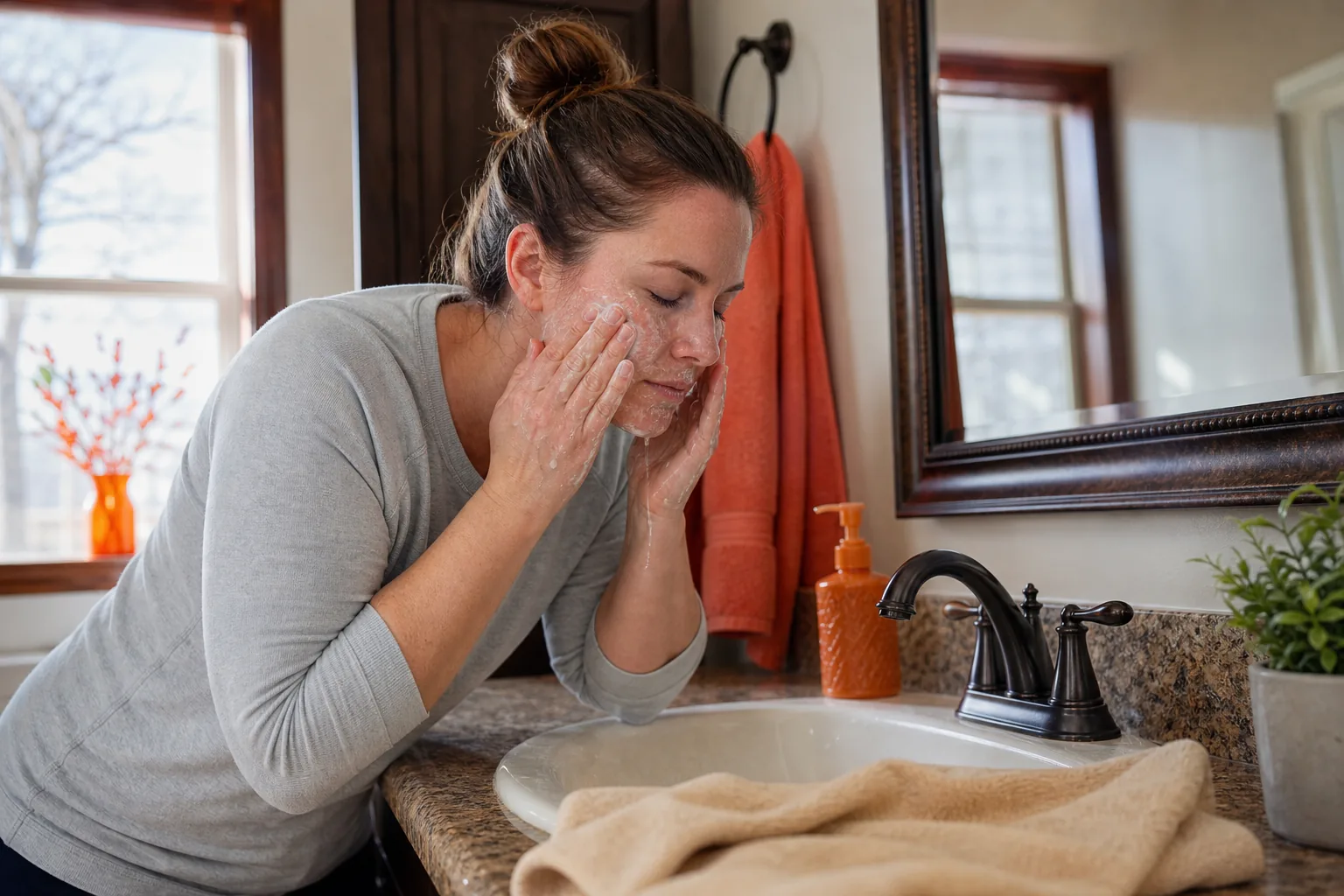
Keep the first version of your routine plain. Choose a mild cleanser and a moisturizer your skin tolerates, then use them consistently before adding treatment products. Rosacea-prone skin can react to skin care products, so a short routine makes it easier to spot a problem.
Wash with lukewarm water and your fingertips. Don’t scrub with a cloth or brush. Rinse well, then pat your face dry. If cleansing leaves your skin tight or burning, pause and ask a clinician or pharmacist whether the cleanser may be irritating you.
Look for a moisturizer that feels comfortable and doesn’t cause a new reaction. Fragrance-free products may be worth considering if fragrance bothers your skin, but a label alone can’t predict how your skin will respond. Some products aimed at sensitive skin include barrier-supporting ingredients such as ceramides. Introduce any new formula cautiously.
Rosacea is linked with skin sensitivity and changes in the skin barrier. A review in a peer-reviewed journal discusses these features in research on rosacea and skin barrier function . That’s one reason to avoid adding several new products at once. The goal is to keep your routine easy to assess, not to chase a long ingredient list.
Medical-grade is a marketing term, not a guarantee that a product will suit rosacea. Check the full ingredient list, follow product directions, and ask a clinician about ingredients that have caused irritation for you before. If you're comparing product routines, PS Aesthetics Wellness + Skinbar has a separate guide to building a product routine ; use clinician guidance to decide whether any routine fits your skin.
Step 3: Discuss Targeted Ingredients With a Clinician
Once your basic routine feels manageable, ask whether a targeted ingredient matches your symptoms. The right choice depends on what you’re treating. Persistent redness and acne-like bumps may call for different approaches, and a skin care product is not a substitute for a diagnosis.
Azelaic acid is an ingredient in treatments for acne-like breakouts and long-lasting color. Ask your prescriber whether it fits your skin and how to use it. If a product causes marked irritation, check with them before restarting or changing how you apply it.
Other ingredients often discussed in skin care include niacinamide and ceramides. They appear in products made for hydration or barrier support, but an ingredient name alone doesn’t prove a product will calm rosacea. Formulas differ, and people can respond differently. Ask about the full product rather than choosing by one active ingredient.
Be careful with strong exfoliating acids, scrubs, essential oils, and products that contain alcohol if they have triggered stinging or redness for you. This isn’t a rule that every person will react the same way. Your own history matters. Bring a list or photos of product labels to an appointment so a clinician can help review them.
Prescription treatments may be considered for some rosacea symptoms. Don’t start, stop, or change a prescription based on a skin care article. Your prescriber can explain the intended use, how to apply it, and what to do if irritation occurs. For aesthetic questions in Edmond, PS Aesthetics Wellness + Skinbar provides a menu of services to discuss during an assessment; that discussion doesn’t replace medical diagnosis or care.
Step 4: Add Daily Sun Protection to Your Routine
Sun exposure is a commonly reported rosacea trigger, so make sun protection part of your daily plan. Choose a broad-spectrum sunscreen that you can apply as directed and tolerate. If a formula stings or causes a rash, stop using it and ask a clinician or pharmacist about another option.
Apply sunscreen according to its label, including the amount and reapplication directions. Add a hat or seek shade when you can, especially during extended time outdoors. On a bright day, sun protection matters even if you’re only outside for short stretches at a time.
Use the same careful approach when you travel or the weather changes. Pack the cleanser and moisturizer you already tolerate rather than relying on unfamiliar hotel products. In cold or windy weather, cover exposed skin when you can. Heat, wind, cold, and indoor heat are all reported by some people as triggers, so note your own response instead of assuming every change will affect you.
If you’ve had laser resurfacing or another procedure, follow the treating clinician’s instructions for aftercare and sunscreen timing. Advice for healing skin can differ from a usual rosacea routine. PS Aesthetics Wellness + Skinbar has a separate guide to moisturizers after laser skin resurfacing ; it applies to procedure recovery, not as general rosacea treatment advice.
Keep a sunscreen that fits your day where you’ll use it. That could be by your morning skin care items or in a travel bag. If you’re outdoors for a longer time, plan ahead so you can follow the label’s reapplication guidance.
Step 5: Introduce Products Gradually and Track Your Skin’s Response
Add one new product at a time. Keep the rest of your routine steady while you see how your skin responds. If you change cleanser, moisturizer, and treatment in the same week, it’s hard to tell which one caused a new reaction.
Before using a product on your face, test it on a small area as directed by a clinician or the product label. A small-area test can help you notice irritation, but it can’t guarantee that your face won’t react later. Stop using a product that causes a concerning reaction and ask a health professional what to do next.
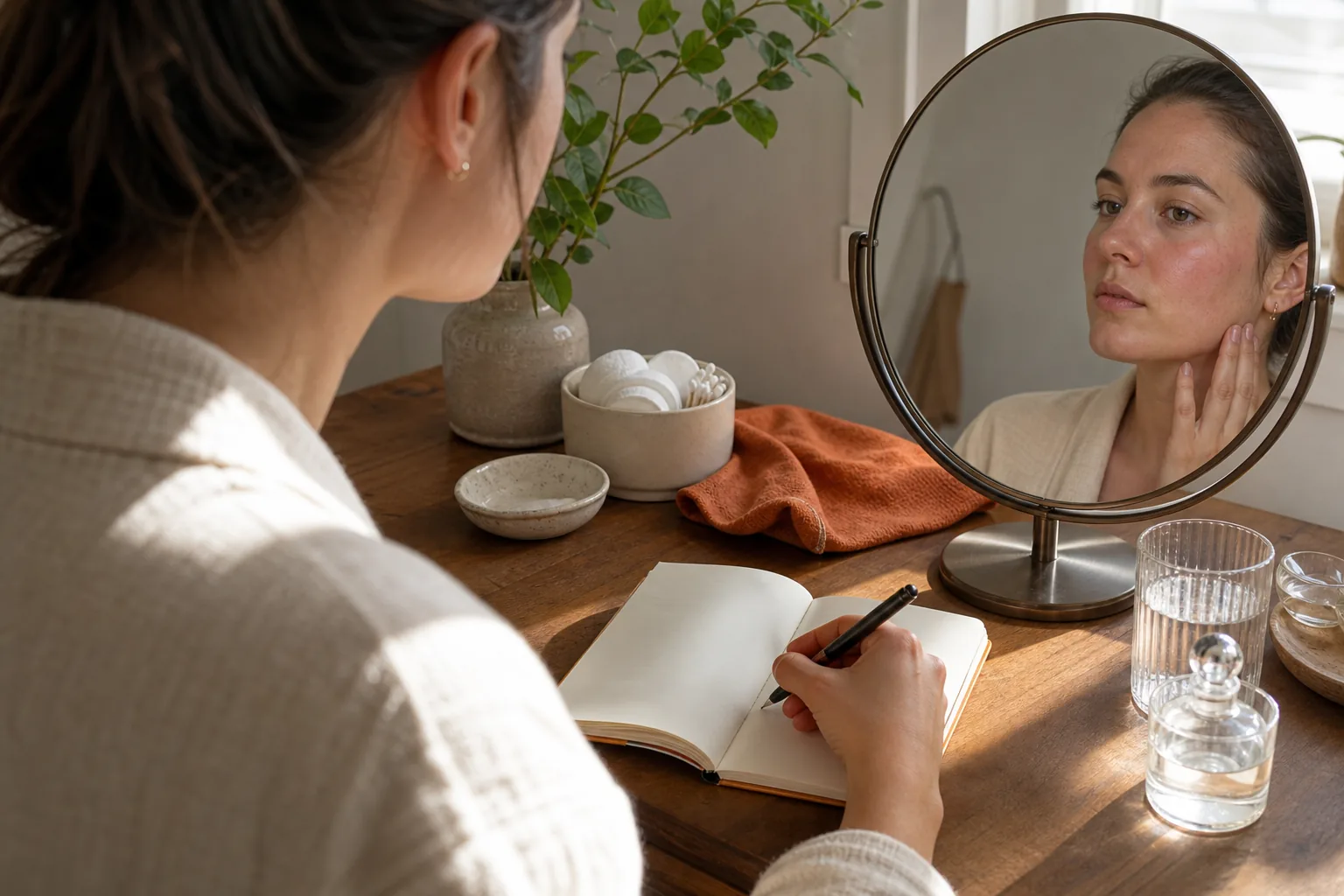
Write down the product name, where you used it, and what you noticed afterward. Keep the record simple. For example, note whether you felt burning soon after application or saw more redness later that day. Also note outside factors such as heat or exercise, since they can make the pattern harder to read.
Don’t push through ongoing discomfort just because a product is described as medical-grade or gentle. Ask your clinician how long to assess a product and when to stop. If you use prescription treatment, check before layering another active product over it.
Keep the routine steady long enough to judge one change, unless you have a reaction that needs attention. Once a product seems tolerable, discuss the next step with your clinician. A short routine you understand is easier to maintain than a shelf full of products with unclear roles.
Frequently Asked Questions
What should a rosacea skincare routine include?
A rosacea routine often starts with a mild cleanser, a moisturizer you tolerate, and daily sun protection. Add targeted products only after your basic routine is steady. Rosacea symptoms vary, so ask a clinician whether an active ingredient or prescription treatment fits your symptoms. Stop and seek advice if a product causes a concerning reaction.
Is medical-grade skincare better for rosacea?
No product category guarantees that a formula will suit rosacea-prone skin. “Medical-grade” is a marketing term, so check the ingredients and directions rather than relying on the label. A clinician can help you choose based on your symptoms and past reactions. Introduce one product at a time so you can assess your skin’s response.
Can I use azelaic acid if I have rosacea?
Azelaic acid is among the treatments a clinician may discuss for certain rosacea symptoms. Whether it suits you depends on your skin and the product’s directions. Ask your prescriber before starting it, especially if you already use prescription treatment. Contact them if irritation develops instead of changing your treatment plan on your own.
When should I see a doctor about rosacea?
See a doctor or dermatologist if you have ongoing facial redness, flushing, bumps, or skin discomfort and aren’t sure what’s causing it. Seek prompt advice for eye symptoms. Eye pain, light sensitivity, or changes in vision need timely medical assessment. For sudden or severe symptoms, seek emergency care rather than relying on skin care products.
Conclusion
Start with a gentle, steady routine, then discuss targeted products with a clinician before adding them. If you’re in Edmond, PS Aesthetics Wellness + Skinbar can be one place to discuss aesthetic services and skin care questions; ask for an assessment to learn whether an option fits your needs.

Comments