


Medical Weight Loss Centers: 5 Provider Profiles
Updated: 1 hour ago

Medical weight loss centers vary in location, care format, and the kind of clinical support they provide. Here are five provider profiles, starting with PS Aesthetics Wellness + Skinbar in Edmond, Oklahoma, so you can see what to ask before choosing a program.
Table of Contents
1. PS Aesthetics Wellness + Skinbar
PS Aesthetics Wellness + Skinbar is a medical spa and salon in Edmond, Oklahoma, with medical weight-loss programs among its services. It may suit local adults who want to discuss weight management in an in-person wellness setting.

The practice also provides aesthetic, wellness, and salon services. Its website says medical aesthetic treatments are performed or overseen by Paige Schwab, APRN, FNP-BC, a licensed nurse practitioner. Ask during an assessment who would oversee your weight-loss care and what follow-up involves.
The practice’s medical weight-loss program in Edmond is a useful starting point for questions about the assessment, care plan, and ongoing visits. Details matter: ask how the clinician will review your health history and whether labs or prescription medication may be part of your individual plan.
Before you compare costs, ask what the estimate covers. A program fee may not include every visit, lab, or medication cost. Get the expected charges in writing and ask how often they may change.
2. Duke Health
Duke Health is an academic medical center with weight-loss care that may suit people with complex needs, including those considering surgical care. Its program brings together obesity medicine physicians, dietitians, behavioral health professionals, and bariatric surgeons.

The team approach can help a patient discuss more than one part of care with clinicians involved in different areas. Your plan’s rules still determine your personal coverage.
Ask whether the service you need is medical management, a surgical assessment, or another form of care. These are not the same visit. If surgery is part of the discussion, ask what evaluation is needed and what follow-up will look like after the procedure.
An academic center may be worth considering when your health history involves several concerns or you want multiple clinical roles involved. Confirm which location provides the care you need and whether appointments require travel.
3. Form Health
Form Health is a virtual program with dietitian-led support focused on muscle and long-term maintenance. People comparing medical weight-loss centers can ask what support is included and how follow-up is handled.

Dietitian-led support may be relevant to people considering how a program addresses muscle and maintenance. Ask what support is available between appointments and what the program’s care plan includes.
For any care delivered remotely, access to technology and travel needs may be considerations. Remote formats can include video visits and messaging .
Before enrolling, ask whether the program serves your state and how questions that need an in-person exam are handled. Ask how the care plan and follow-up are explained.
4. MinuteClinic by CVS Health
MinuteClinic by CVS Health provides basic access close to home through in-person clinics. It may suit someone who wants a nearby place to start a medical discussion about weight management.
A provider can review your health history, current medicines, height, weight, and other health factors to consider whether prescription treatment is appropriate. Ask how often visits occur and what support continues over time.
Ask for the full expected cost before you begin. Separate the cost of an assessment from possible medication, lab, and follow-up charges. If you plan to use insurance, check coverage with your insurer and ask whether prior authorization is required. Coverage and eligibility depend on your plan and individual assessment.
Convenient access can make an initial conversation easier. Still, convenience alone doesn’t tell you whether a program’s follow-up fits your needs. Ask who handles dose or care changes and how to reach the care team with a concern.
5. Beaumont Weight Control Center by Corewell Health
Beaumont Weight Control Center by Corewell Health is a Michigan-based medical weight-management service. Its listed location is in Royal Oak, and virtual appointments may also be available.
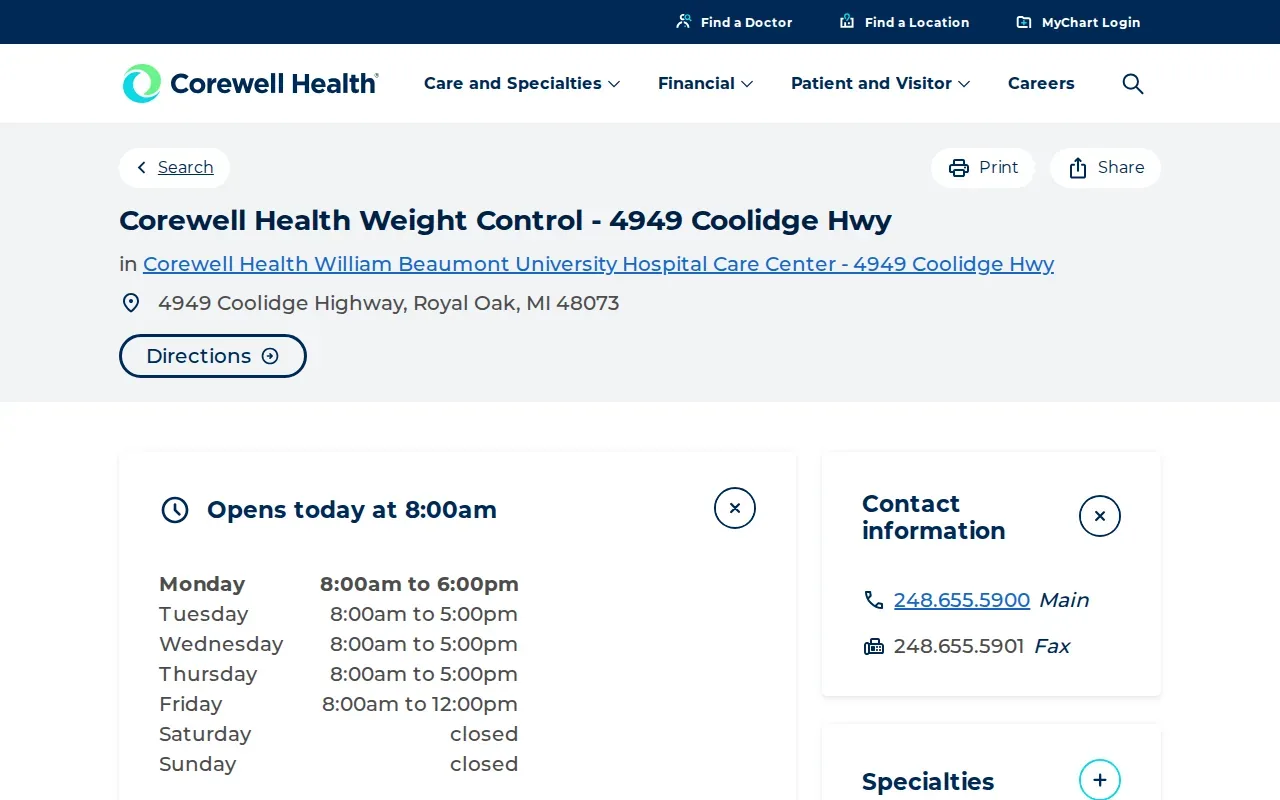
Care options include lifestyle-based plans, medical weight-loss programs, and surgical options. The team can help assess which next steps may fit a person’s needs.
Ongoing support may include checkups, classes, coaching, and educational resources. Ask which services apply to the particular program you’re considering, and whether visits can be virtual or need to take place in person.
Corewell Health advises patients to check coverage with their insurer. Its financial counselors may help determine eligibility for interest-free payment plans. Ask for a written estimate that separates clinical visits from any other expected costs, then confirm coverage with your plan before making a decision.
Questions to Ask Before Enrolling at a Medical Weight Loss Center
A medical program differs from a self-guided diet plan or gym routine because it can include a clinician’s assessment and ongoing care. That doesn’t mean every program includes the same services. Ask the questions below, then compare answers in writing.
Who evaluates and follows me?Ask which licensed clinician reviews your health history, who makes treatment decisions, and how to contact the care team.
What does the first visit include?Ask whether it covers a medical history review, measurements, lab work, or discussion of possible treatment paths.
How does follow-up work?Find out how often you’ll meet, how progress is reviewed, and what support is available for long-term maintenance.
Could prescription medication be considered?Ask how the prescriber decides whether it may be appropriate for you. Discuss possible side effects, health conditions, current medicines, and when to seek help. Your prescriber should answer questions about your specific situation.
What will I pay?Request a written estimate that separates visits, tests, medication, and other program costs. Ask what insurance may cover and whether prior authorization is needed.
Can I get care in person or virtually?Ask which format is available where you live and what happens if you need an in-person assessment.
Coverage rules can differ by plan and by the purpose of a medicine. People using Medicare can check current coverage details and confirm their own eligibility with their plan and prescriber.
For more local context, compare the service types and locations in these profiles of weight-loss clinics near you . Use any directory as a starting point, not a substitute for checking a provider’s credentials, care plan, and full costs.
Pro Tip:Keep a short list of your questions and the answers you receive. It makes it easier to compare what each program includes without relying on a headline or a quoted monthly fee.
Contact your doctor promptly about unexplained, rapid weight changes or new symptoms. Seek emergency care for severe or sudden symptoms. Don’t stop or change a prescribed medicine without discussing it with the prescriber.
Frequently Asked Questions
What happens at the first medical weight-loss appointment?
The first appointment often includes a review of your health history and goals. The clinician may also review current medicines and decide whether tests or other assessments are needed. Ask what the visit includes before you attend, since the process varies by program. The clinician can explain which care options may be suitable after assessing your situation.
Do medical weight-loss centers prescribe medication?
Some centers may discuss prescription medication, but a clinician must assess whether it is appropriate for you. The decision can depend on your health history, current medicines, and other individual factors. Ask who prescribes, how the care team monitors you, and what follow-up is included. Bring medication and safety questions to your prescriber.
Does insurance cover medical weight-loss care?
Coverage depends on your plan, the service, and any requirements such as prior authorization. A center’s statement about accepting insurance doesn’t guarantee that your plan will pay for a specific visit, test, or medication. Check your benefits with the insurer and ask the center for billing details before you enroll.
Is virtual medical weight-loss care different from in-person care?
Yes. Virtual care happens remotely, while in-person care takes place at a clinic. Both can include clinician contact, but the available assessments and visit options may differ by program. Ask how the team handles lab work, urgent concerns, and any need for an in-person exam. You’ll also need access to the technology used for remote visits.
When should I see a doctor about a change in my weight?
See a doctor promptly if your weight changes rapidly without a clear reason or you develop new symptoms. A clinician can review possible causes and discuss appropriate next steps. Seek emergency care for severe or sudden symptoms. If you have a concern about a prescribed medicine, contact its prescriber before changing how you take it.
Conclusion
Choose a program whose clinical oversight, visit format, follow-up, and full costs make sense for you. If you’re in Edmond, PS Aesthetics Wellness + Skinbar offers a medical weight-loss program in a medical-spa setting. Your next step is to request an assessment and ask whether its care plan suits your health needs.


Comments