


Lip Filler Before and After: What to Expect
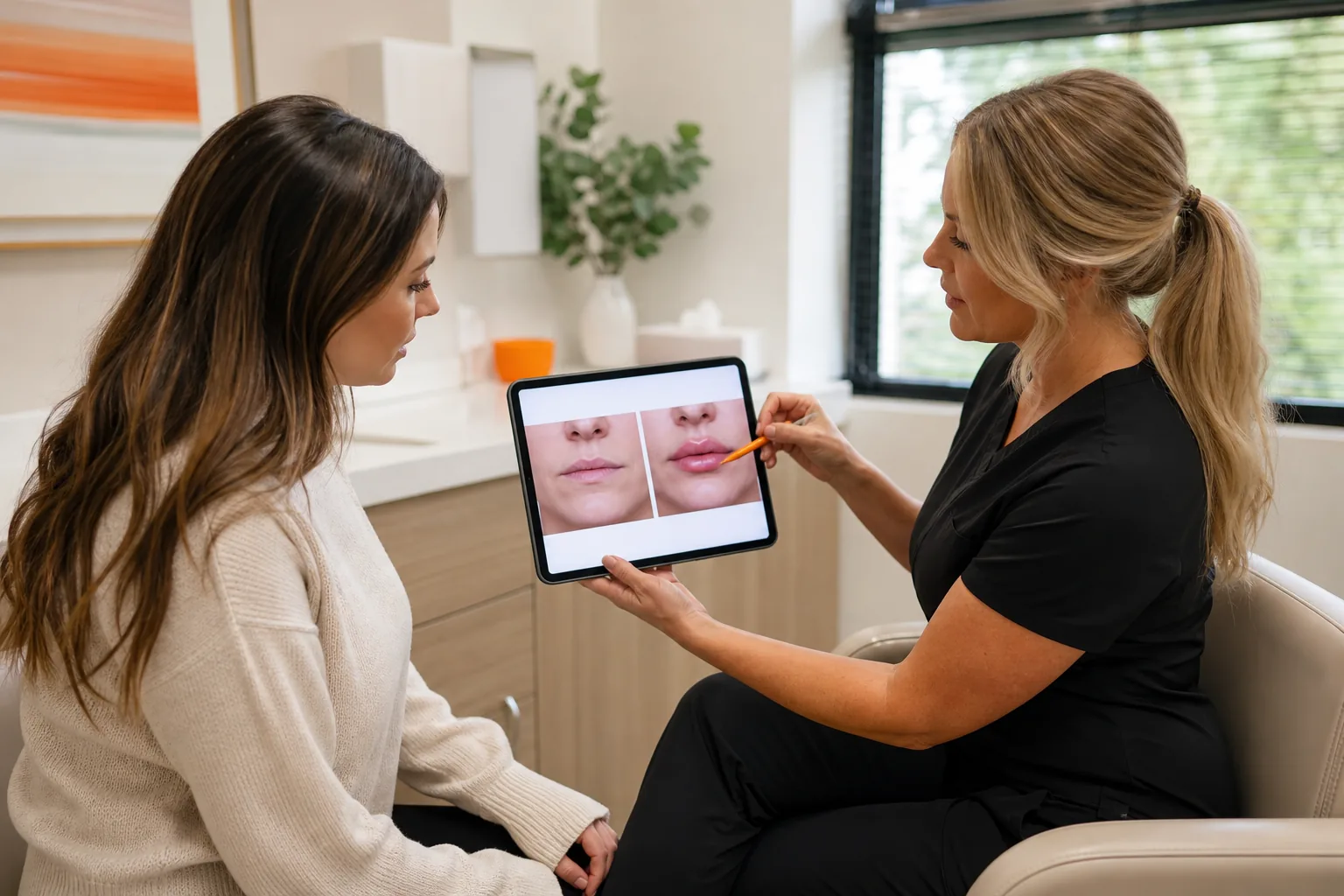
Lip filler before-and-after photos can show changes in fullness and shape, but they don’t predict your result. The first few days may look different from the settled result, so compare photos with care and ask a licensed medical professional what to expect for your own lips.
Table of Contents
What Lip Filler Before-and-After Photos Can Show
Photos can help you see how a treatment may affect lip volume, the border of the lips, or the Cupid’s bow. They can also show how a subtle change differs from a more noticeable one. But a photo is one person’s result, not a forecast for someone else.
For a fair comparison, look for images taken at similar angles and in similar lighting. The person’s expression should be relaxed in both photos. Check whether the photos were taken soon after treatment or after swelling had time to ease. Different camera distance, makeup, lighting, or facial expression can make lips appear larger or more defined.
When you review a clinic’s images, ask when each photo was taken and whether the person had other treatments. Ask what product was used and whether the images show an early result or a later check-in. A clear answer helps you understand what the image can and can’t tell you.
A photo set should support a conversation, not set a required target. Your starting lip shape, facial proportions, health history, and goals all matter. PS Aesthetics Wellness + Skinbar provides aesthetic services in Edmond, Oklahoma. Any treatment plan should follow an individual assessment.
Notice whether the images show the whole face as well as a close-up. A close view can help you see lip edges, while a full-face view gives more context for proportion. Neither view proves how a treatment will look on you.
Some images may show a dramatic change, while others show a small shift in definition. The amount of product alone doesn’t tell the full story. Placement and the person’s natural anatomy also affect the look.
How Lip Filler Can Change Lip Shape and Volume
Lip filler is an injectable gel used to add volume or alter the shape of the lips. Many lip fillers use hyaluronic acid, a substance found in the body. The gel is placed in selected areas, so the treatment plan can focus on fullness, definition, or a balance between them. Results and duration can vary.
Small changes in placement can affect how the upper lip, lower lip, or border looks. A plan may aim for a soft increase in fullness rather than a large change. The goal is a decision you and the treating professional discuss together, based on your anatomy and preferences.
Injection approaches may differ according to aesthetic concerns. Ask how anatomy, product choice, and technique may affect the plan. Swelling and overfilling are possible concerns, so ask about risks and expected recovery.
PS Aesthetics Wellness + Skinbar offers injectable treatments in Edmond. All of its medical aesthetic treatments are performed or overseen by Paige Schwab, APRN, FNP-BC, a licensed nurse practitioner. During an assessment, ask which product is being considered and whether it is intended for the area being treated.
A lip flip and lip filler are different treatments. A lip flip uses a wrinkle-relaxing injectable, while filler adds gel volume. They aren’t interchangeable, so a discussion of your goal can help clarify which option, if any, is suitable. Ask which approach may suit your goal: lip flip or lip filler .
Ask what the product is made of, what change it may be used for, and what side effects are possible. You can also ask what happens if you’re unhappy with the result or develop a concern. Don’t feel you need to decide before you understand the plan.
Why Lips May Look Different Before and After They Settle
The look right after an injection isn’t the same as the settled result. Swelling and tenderness can affect the shape, and the two sides may look uneven while the tissue is changing. That early appearance alone doesn’t show what the final result will be.
In the first 24 hours, lips may look fuller or feel tender. Bruising may also appear. Over the next several days, swelling often starts to ease, though timing differs from person to person. Bruising can take longer to fade.
At about one week, some people may still have bruising or tenderness. At around one month, the lips may be closer to their settled appearance. These are broad planning points, not a personal timetable. Your injector should tell you when they expect to review your result.
Compare progress under similar conditions. Use the same room, lighting, camera distance, and relaxed expression if you take photos. Changes in angle or lighting can make swelling seem better or worse than it is.
Don’t press, rub, or massage the area to make it look more even unless your treating professional tells you to. Ask before using a cold compress or applying products to the injection sites. Follow the instructions given for your specific treatment.
If swelling keeps getting worse or a symptom concerns you, contact the treating professional rather than relying on a photo timeline. A planned follow-up gives you a chance to discuss the result after the early changes have eased.
Factors That Can Affect Lip Filler Before-and-After Results
There isn’t one standard outcome or timeline. Your starting lip shape matters, as does the amount and type of filler chosen. The way product is placed can also affect definition and fullness. A medical review of lip filler techniques describes anatomy and treatment approach as factors in planning.
Your goal matters, too. Someone seeking subtle definition may need a different plan from someone who wants more volume. Photos can help you explain what you like, but ask the injector to discuss what is realistic for your own features.
Product details are worth discussing before treatment. Ask for the product name and the manufacturer’s patient information. Ask whether the filler is intended for lip use and how long its effect may last. Duration varies by product and person, so a stated estimate should not be treated as a guarantee.
There’s no single average price that applies to every person or clinic. Cost can depend on the product and amount used, the area treated, and the clinician’s fees. Before deciding, ask for the full cost of the proposed plan, including whether a follow-up visit or any additional treatment would cost extra.
Also ask about the clinician’s license and training with injectable fillers. Confirm that the treatment takes place in an appropriate medical setting. You can ask how the practice handles an urgent complication and what contact route to use if you have a concern afterward.
Key Takeaway:A useful photo is one piece of context; your own assessment, product details, and treatment plan matter more than matching someone else’s result.
Be cautious about judging a result too soon or adding more filler before swelling has eased. The medical review notes that excessive filler can contribute to an unnatural appearance or affect lip movement. Talk through a gradual approach if you’re unsure about the amount.
Recovery, Risks, and When to Seek Medical Care
Swelling, bruising, redness, tenderness, and discomfort can occur after injections. Small lumps may also be a concern to discuss with the treating professional. The chance and course of side effects differ, so ask which changes are expected for your treatment and which need a check-in.
Before treatment, share your health history, allergies, current medicines, and prior filler treatments. Don’t stop a prescribed medicine on your own to reduce bruising. Ask the clinician who prescribed it what is appropriate, and tell the injector about that advice.
After treatment, follow the instructions you were given. Keep the area clean and avoid touching or pressing it unless your clinician has told you otherwise. Ask when you can return to strenuous exercise, heat exposure, makeup, and your usual skin care. Guidance can differ by treatment and person.
Use only a cooling method if your injector approves it, and follow their directions.
Choose a calm first day and avoid vigorous activity until your clinician says it’s appropriate.
Ask before taking medicine or applying a cream to the treated area.
Keep your follow-up plan and note any change that worries you.
For general aftercare questions, see the aftercare guide . Your own injector’s instructions should take priority because they know what was used and how the area was treated.
Seek urgent medical care for sudden severe pain, a marked pale or blotchy skin change near the injection area, or vision changes. These symptoms need prompt medical assessment. Don’t massage the area or wait for a routine follow-up if they occur.
For symptoms that aren’t severe but feel unexpected, contact the treating clinician and describe when they began and whether they’re changing. If you can’t reach the clinic and symptoms are worsening, seek medical care. For a life-threatening emergency, call 911.
PS Aesthetics Wellness + Skinbar is a medical spa and salon in Edmond, Oklahoma. If you’re considering an injectable treatment, an assessment can help you discuss your goals, health history, and questions before deciding whether an option suits you.
Frequently Asked Questions About Lip Filler Before and After
How long does it take for lip filler to settle?
Lip filler may take several weeks to settle, but timing varies. Swelling and bruising can change the early appearance, so a first-day photo isn’t a reliable guide to the settled result. Ask your injector when they recommend reviewing your lips, and contact them sooner if symptoms worsen or concern you.
What should I look for in lip filler before-and-after photos?
Look for photos with similar lighting, angles, distance, and facial expression. Ask when the after photo was taken and whether other treatments were involved. Photos can show one person’s change, but they can’t predict yours. Use them to describe your preferences during an assessment rather than as a promise of a specific result.
How long do lip filler results last?
Duration depends on the filler, the amount used, and individual factors. Ask which product is being considered and what duration the clinician expects for that product and treatment plan. Any estimate is not a guarantee. A follow-up discussion can help you decide if or when another assessment makes sense.
How much does lip filler cost?
There isn’t one price that applies to every treatment. Cost may vary with the product, amount used, treatment area, and clinician’s fees. Ask for a written estimate for your proposed plan, including any follow-up costs. Avoid comparing prices without checking what product and amount each estimate covers.
When should I seek medical care after lip filler?
Get urgent medical care for sudden severe pain, a pale or blotchy skin change near the injection area, or vision changes. Contact your treating clinician about symptoms that feel unexpected or keep worsening. If symptoms are severe or life-threatening, call 911 rather than waiting for a scheduled follow-up.
Conclusion
Use photos to clarify your preferences, not to set an exact target. Before choosing treatment, ask a licensed medical professional about the product, likely recovery, risks, and total cost. If you’re in Edmond, PS Aesthetics Wellness + Skinbar can discuss whether an injectable assessment fits your goals and health history.


Comments