


PRP Hair Treatment Results: What to Expect
Wondering if PRP can make a visible difference to thinning hair? PRP hair treatment results vary, and one small U.S. clinical snapshot reported an average increase of 35 hairs after four months. Here’s how to interpret that finding, what a session involves, and what to ask before you decide.
Table of Contents
What PRP Hair Treatment Results May Look Like
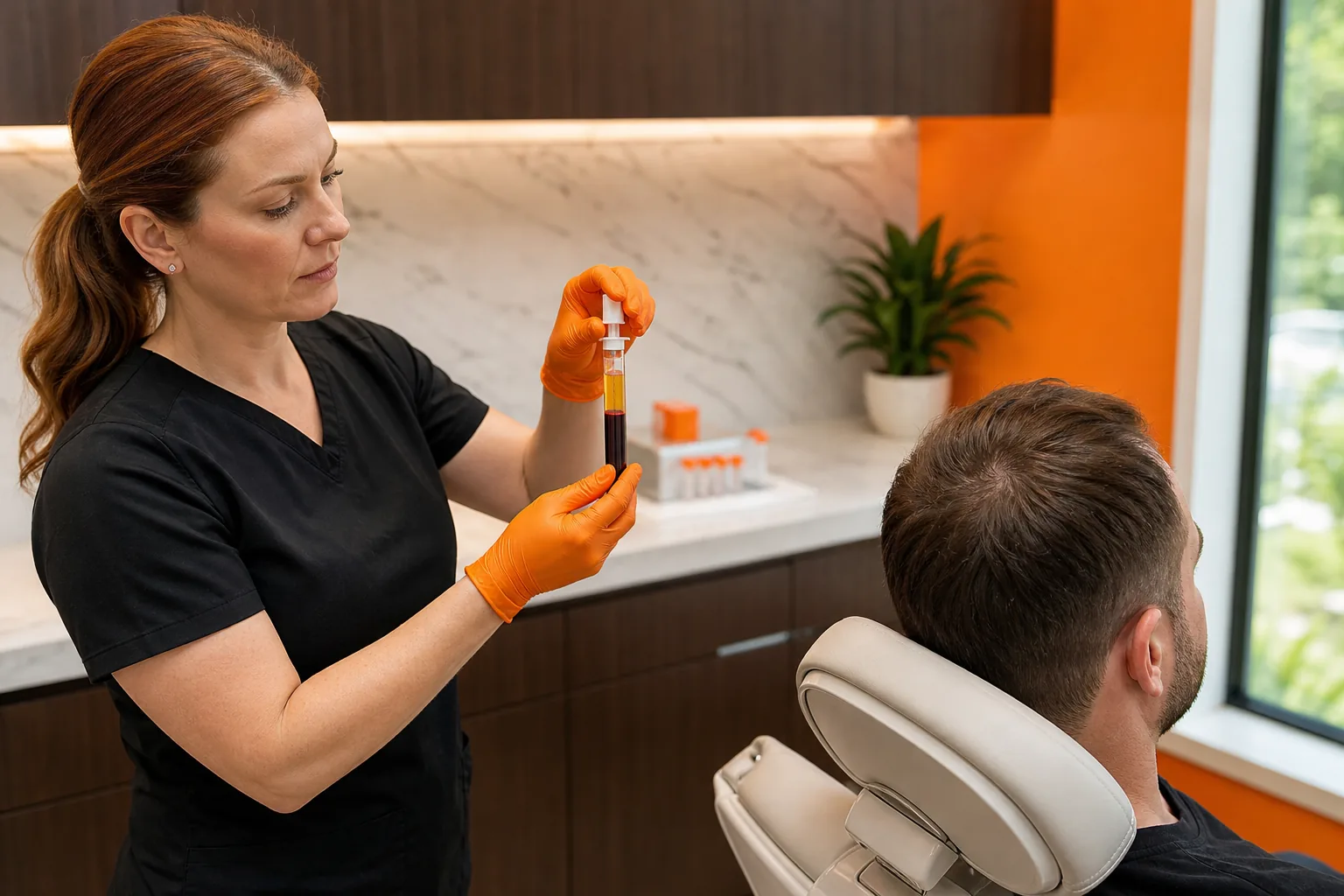
Platelet-rich plasma, or PRP , starts with a small sample of your own blood. A clinician processes the sample to concentrate platelets in plasma, then injects that preparation into areas of the scalp with thinning hair. Platelets release signaling proteins involved in cell activity and tissue repair. Researchers think these signals may affect existing hair follicles, but the exact process is still being studied.
When PRP helps, changes may show up as greater hair density or thicker hair shafts. Some people may notice less shedding. It isn’t established that PRP creates new follicles, restores every type of hair loss, or brings back hair on a fully bald area. Think of it as a treatment that may affect follicles that are still present, not a way to make new ones.
Practical Dermatology's review of recent advances in hair restoration covers where PRP fits. Study findings don’t predict what one person will see. A study may not show whether a change looks noticeable, how satisfied participants feel, or how long it lasts.
Before-and-after photos can help track change, but they need careful reading. Compare images taken with similar lighting, camera distance, hair part, length, and styling. A change in lighting or hairstyle can make scalp coverage look different. Photos also don’t show how many hairs were counted or whether a clinician used the same measurement area each time.
PRP for the scalp is different from PRP used for facial treatments. If you’re curious about the preparation and risks for another treatment area, PS Aesthetics Wellness + Skinbar has an overview of PRP therapy for the face .
Key Takeaway:A change in a study’s hair count is not the same as a guaranteed visible change for an individual.
When Changes May Become Noticeable
PRP changes, if they occur, are assessed over months rather than days. Hair grows in cycles, and a treatment cannot make every follicle change at once. The 24-person report described above measured hair count at four months. That gives one time point, not a universal deadline for seeing a difference.
It’s common to want an early sign that treatment is working. But a few weeks may be too soon to judge hair density from memory or a casual mirror check. Consistent photos and, when available, repeat measurements of the same scalp area give a more useful comparison. A clinician can also discuss whether ongoing shedding or a change in hair texture needs a separate evaluation.
There isn’t one standard PRP formula. The concentration of platelets and the way the blood is processed can differ. Injection volume and the spacing of sessions may differ too. PRP protocols vary , which makes results from one clinic or study hard to apply directly to another.
Ask the clinician what change they plan to measure and when they’ll review it with you. A clear follow-up plan can help separate a real change from normal variation in hair styling or shedding. It also gives you a point to revisit the plan if there’s little measurable change.
PRP is not an emergency treatment for sudden hair loss. If hair loss starts abruptly, appears in patches, or comes with scalp pain, redness, scaling, or sores, contact a doctor promptly. A sudden change can have causes that need medical assessment before any cosmetic treatment is considered.
Factors That Can Influence an Individual Response
The likely response depends first on why the hair is thinning. PRP research mainly concerns pattern hair loss, and findings for one cause should not be assumed to apply to another. Diffuse shedding can have different triggers, so a clinician may ask about when it began, how quickly it changed, and whether other symptoms are present.
Follicles that are still present may respond differently from areas where follicles have been lost or damaged. That does not mean every person with thinning hair will benefit.
Preparation matters too. PRP isn’t a single standardized product. Platelet concentration and the processing method can vary, as can injection technique and treatment spacing. That variation makes study results difficult to compare and means that a result from one protocol may not match another.
Health history is part of the discussion. Tell the clinician about medicines, bleeding problems, scalp conditions, and recent changes in your health. Don’t stop a prescribed medicine to prepare for treatment unless the prescriber tells you to. The reason for hair loss should be assessed rather than guessed at from appearance alone.
Hormonal changes may also be part of a hair-loss assessment, but a treatment plan depends on the cause, not on a single symptom. PS Aesthetics Wellness + Skinbar’s article on hormone therapy and hair loss discusses why evaluation matters. It should not be taken as a reason to start or change hormone treatment without a clinician’s advice.
At PS Aesthetics Wellness + Skinbar in Edmond, Oklahoma, all medical aesthetic treatments are performed or overseen by Paige Schwab, APRN, FNP-BC, a licensed nurse practitioner. If you’re considering PRP, ask whether it’s available and whether an assessment supports it for your situation.
How Clinicians Assess Progress and Interpret the Evidence
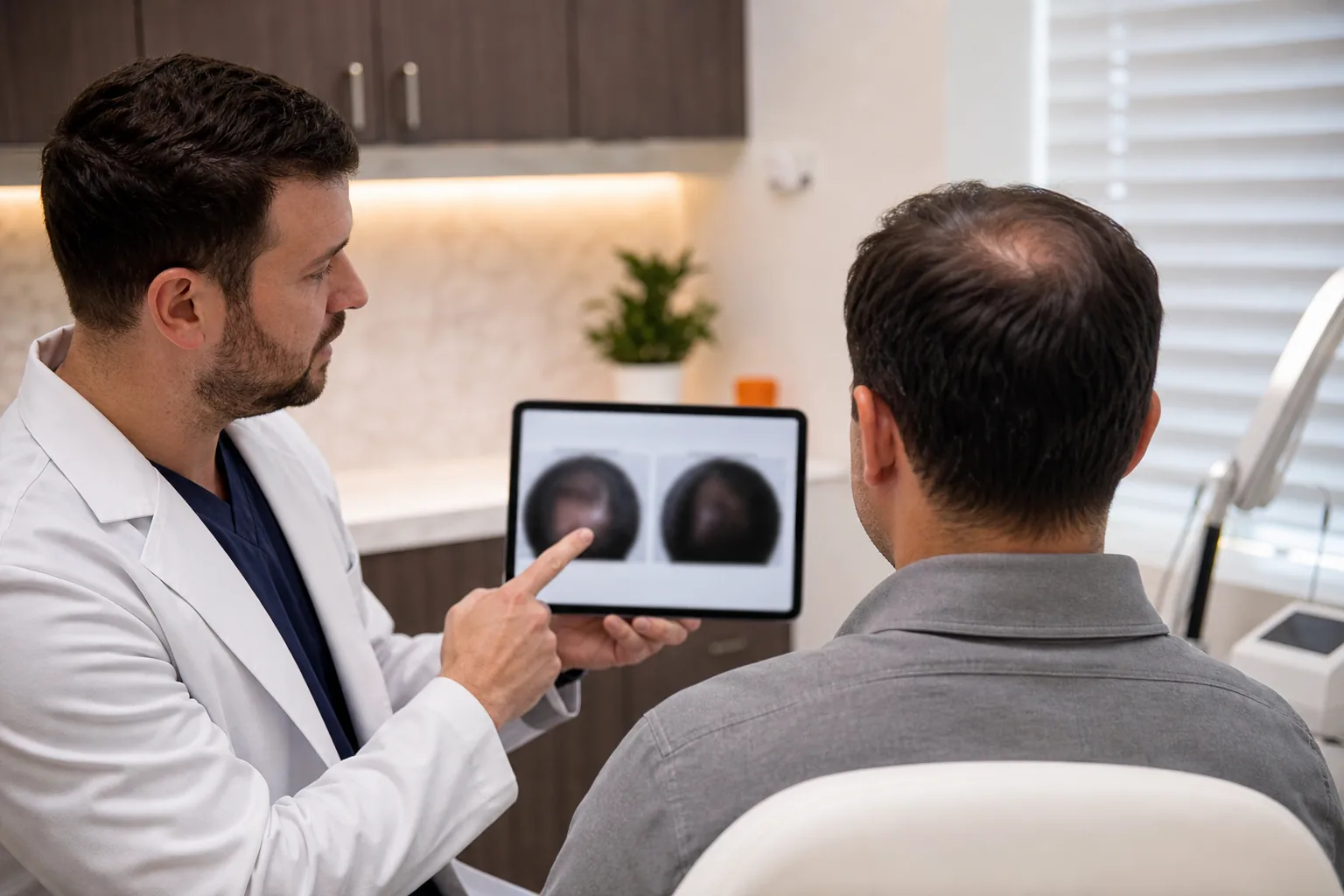
A clinician may track hair count or density in a set scalp area, examine hair-shaft thickness, and take repeat photographs. These measures answer different questions. A hair count can change without a dramatic change in appearance, while photos can look different because of light, angle, or styling.
Results from a study should be interpreted in context: the measurement used, the follow-up period, and the number of people studied all matter. A change in a measured hair count does not necessarily mean a visible cosmetic change, and a study result is not a promise or a typical result for every person.
Clinical research has examined PRP for pattern hair loss, but studies use different preparation methods and outcome measures. Results and treatment methods can vary, so findings from a study can support a discussion but can’t tell an individual exactly what to expect.
Ask how progress will be measured before starting. For example, will the clinician compare photographs under the same conditions, or record a hair count in a marked area? Ask when the review will happen and what the plan would be if the measures don’t change. A clear measure makes the conversation more useful than relying on a general impression.
Marketing photos deserve the same care. A single image cannot show whether a person had the same lighting, hair length, or camera angle in both shots. It also cannot tell you how many people had little or no measurable response. Look for the measurement method and the time between images, not only the visual contrast.
Treatment Course, Maintenance, and Safety Questions
A typical session starts with a blood draw. The sample is prepared to concentrate platelets in plasma. A clinician then injects the prepared material into selected areas of the scalp. Ask what steps the clinic uses and what you may feel during the injections.
Because PRP comes from your own blood, an allergic reaction may be less likely than with some other injectable materials. That does not make the procedure risk-free. Temporary soreness or bruising can happen at injection sites. Infection is also a risk with injections, so ask how the treatment area and equipment are handled.
There is no single session schedule that applies to everyone. Treatment intervals can vary, and maintenance may be needed to retain any benefit. Ask what schedule is being proposed, why it fits your case, and what evidence supports that plan. Don’t assume that a fixed number of sessions is right for every person.
Costs can depend on the treatment plan and the clinic, so ask for the full expected cost before deciding. Insurance coverage can vary too. Check with your plan rather than assuming coverage.
For other PRP treatment areas, PS Aesthetics Wellness + Skinbar explains common cost factors in its guide to PRP injection cost . Scalp treatment costs and plans may differ, so use that information as background, not as a quote for hair treatment.
Follow the clinician’s aftercare instructions, and ask what symptoms should prompt a check-in. Seek medical advice for worsening pain, spreading redness, drainage, fever, or another concerning change. If you take prescription medicines, ask the prescriber before making any change around a procedure.
Pro Tip:Before treatment, write down the measurement method, review date, proposed session spacing, and total expected cost. That gives you a clear basis for follow-up.
PRP Hair Treatment Results: FAQs
How long does PRP take to show results in hair?
PRP changes, when they occur, are usually assessed over months, not days. One small report measured hair count after four months, but that timing doesn’t set a deadline for everyone. Hair growth cycles and treatment protocols vary. Ask your clinician when they’ll check your progress and what measure they’ll use.
How many PRP sessions are needed for hair?
There isn’t one session count that suits everyone. Treatment schedules vary, and there is no standard interval across all PRP protocols. Ask why a clinician recommends a particular course and whether maintenance may be part of it. The plan should account for your diagnosis, goals, and response over time.
Can PRP regrow hair on a bald scalp?
PRP shouldn’t be presented as a reliable way to restore hair on a fully bald area. The proposed effect is on existing follicles, and evidence does not establish that PRP creates new functional follicles. A clinician can assess the scalp and discuss what options fit the cause and extent of hair loss.
What side effects can happen after PRP for hair?
Temporary soreness or bruising at injection sites may occur. As with any injection, infection is a possible risk. A small study reporting no side effects cannot show that nobody will have them. Ask the clinician what to expect and what changes should prompt medical advice, especially if symptoms worsen.
Does insurance cover PRP for hair loss?
Coverage can vary, and PRP for hair loss may not be covered by insurance. Ask your insurer about your specific plan and confirm the full treatment cost with the clinic before proceeding. Also ask whether the quoted amount includes the planned follow-up or any later maintenance sessions.
Conclusion
PRP may help some people with certain types of thinning, but results vary and the evidence does not predict an individual outcome. Start by asking a clinician to assess the cause of your hair loss and explain how progress would be measured. PS Aesthetics Wellness + Skinbar in Edmond can discuss whether an assessment is appropriate for you.

Comments