


Will Hormone Replacement Help Hair Loss?
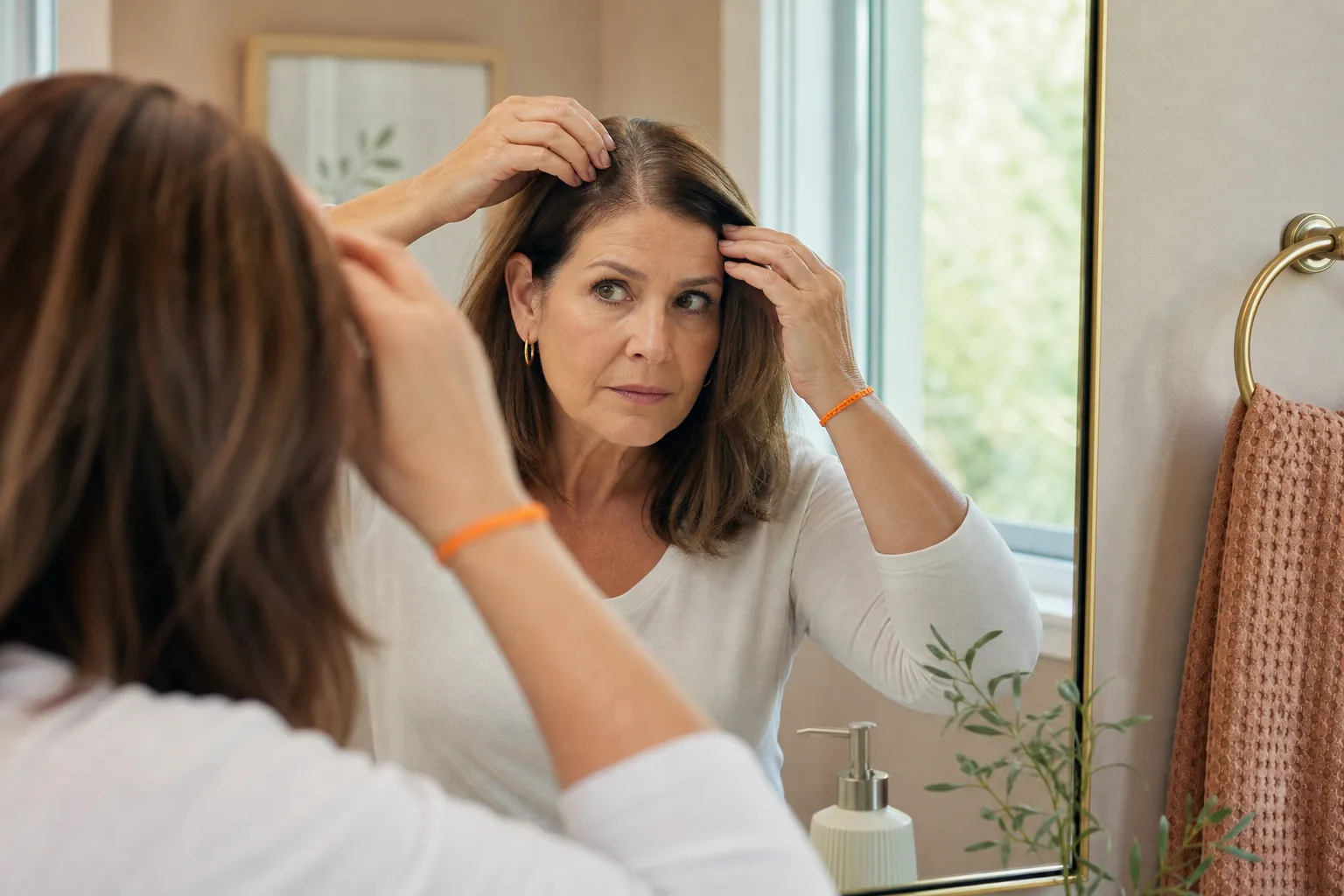
If your hair seems thinner as menopause approaches, it’s fair to ask: will hormone replacement help hair loss? It may affect hair for some people, but HRT isn’t a proven treatment for hair loss on its own, and the cause of thinning matters.
Table of Contents
How Hormones Can Influence the Hair Growth Cycle
Hair grows in repeating stages. During the growing phase, each follicle makes a hair. It then moves through a short transition and a resting phase before the hair sheds. A change in this cycle can mean more shedding or finer hair.
Estrogen levels fall during menopause. That shift may affect the hair cycle, but it doesn’t explain every change in density. Androgens, including testosterone and its more potent form, dihydrotestosterone (DHT) , can also affect scalp follicles. In people whose follicles are sensitive to DHT, hairs may become finer over time.
Hair-loss patterns can vary, and several causes may contribute to changes in density.
Menopause can overlap with several kinds of hair loss. Female pattern hair loss often develops gradually, with a wider part or less density at the crown. Telogen effluvium tends to cause more diffuse shedding after a physical or emotional stressor. These patterns can look similar at first, so hormone levels alone can’t confirm the cause.
That’s why a clinician may ask when the change began, whether it’s shedding or gradual thinning, and whether you’ve had recent illness, weight change, or medication changes. A scalp exam can help guide the next steps.
When HRT May Help Hair Changes Around Menopause
Hormone replacement therapy (HRT) is used to address some symptoms of menopause. It may include estrogen, a progestogen when needed to protect the uterus, or other hormones in specific care plans. The right mix depends on a person’s symptoms and health history. HRT is not established as a treatment for hair loss by itself.
Research on whether estrogen-based hormone therapy can improve hair loss remains limited.
That distinction matters. A person may choose HRT for menopause symptoms, then ask how the proposed hormones could affect their hair. Some small studies suggest estrogen-based therapy may help certain kinds of thinning, but the evidence is limited. A clinician should weigh the possible benefits for menopause symptoms against the risks for that individual.
PS Aesthetics Wellness + Skinbar in Edmond, Oklahoma, offers hormone and sexual wellness treatments. Its Hormone Replacement Therapy service information can help you understand the care it provides, while a clinician can discuss whether a particular plan fits your health needs.
Hormone therapy’s risks vary by a person’s health and the type of treatment. A clinician can discuss those risks in context. Hair concerns should be part of a wider health discussion, not the only reason to start or change treatment.
Can Testosterone Replacement Therapy Make Hair Loss Worse?
Yes, testosterone therapy may worsen scalp hair loss in some people, especially when follicles are sensitive to androgens. Testosterone can be converted into DHT, which may contribute to gradual follicle miniaturization in androgen-sensitive areas. The effect varies with the person, the reason for treatment, and the form of testosterone.
Findings differ by treatment route and population, so results from one group should not be assumed to apply to every person or form of testosterone. A systematic review of androgen supplementation and hair loss covers the research. Don’t change a prescription or start testosterone to affect hair without guidance from the prescriber.
If you’re already using testosterone, note when the thinning started and whether it has changed since treatment began. Share that timeline with the clinician who prescribes it. PS Aesthetics Wellness + Skinbar lists hormone therapy among its services, including testosterone care. Its page on hormone pellet therapy for men describes one part of its hormone service range; it doesn’t establish that pellets prevent or treat hair loss.
Why Hair Loss May Have Another Cause
Hair changes around menopause can have more than one cause. A clinician may consider pattern hair loss, temporary shedding after an illness or stress, a scalp condition, a medicine effect, or a nutritional issue. Treating the wrong cause can waste time, so a diagnosis is useful before you choose a hair treatment.
Frontal fibrosing alopecia is one condition worth knowing about. It can cause a receding hairline and may involve eyebrow loss. It’s a scarring form of hair loss, which means the scalp can show signs beyond simple thinning. A burning, itchy, or sore scalp can also be a reason to seek an exam rather than assume menopause is the cause.
Other patterns give useful clues. Sudden round patches may point to a different problem than a slowly widening part. Diffuse shedding can follow fever, surgery, major illness, or substantial weight loss. Hair pulled tight over time can also contribute to loss along areas under tension.
A clinician may ask about diet and health changes before ordering tests. Depending on your history and exam, they might consider checking iron or ferritin, or testing other nutrients such as vitamin D, B12, or zinc. These tests aren’t needed for everyone, and taking supplements without a clear reason may not address the cause.
Hair-loss care can include options besides HRT. A clinician may discuss topical minoxidil for some patterns of hair loss. Anti-androgen medicines may be considered in selected cases, but they need medical review because their risks and suitability vary. Low-level light therapy is another option some people ask about; device evidence and use can differ, so discuss it with a clinician who can assess your type of hair loss.
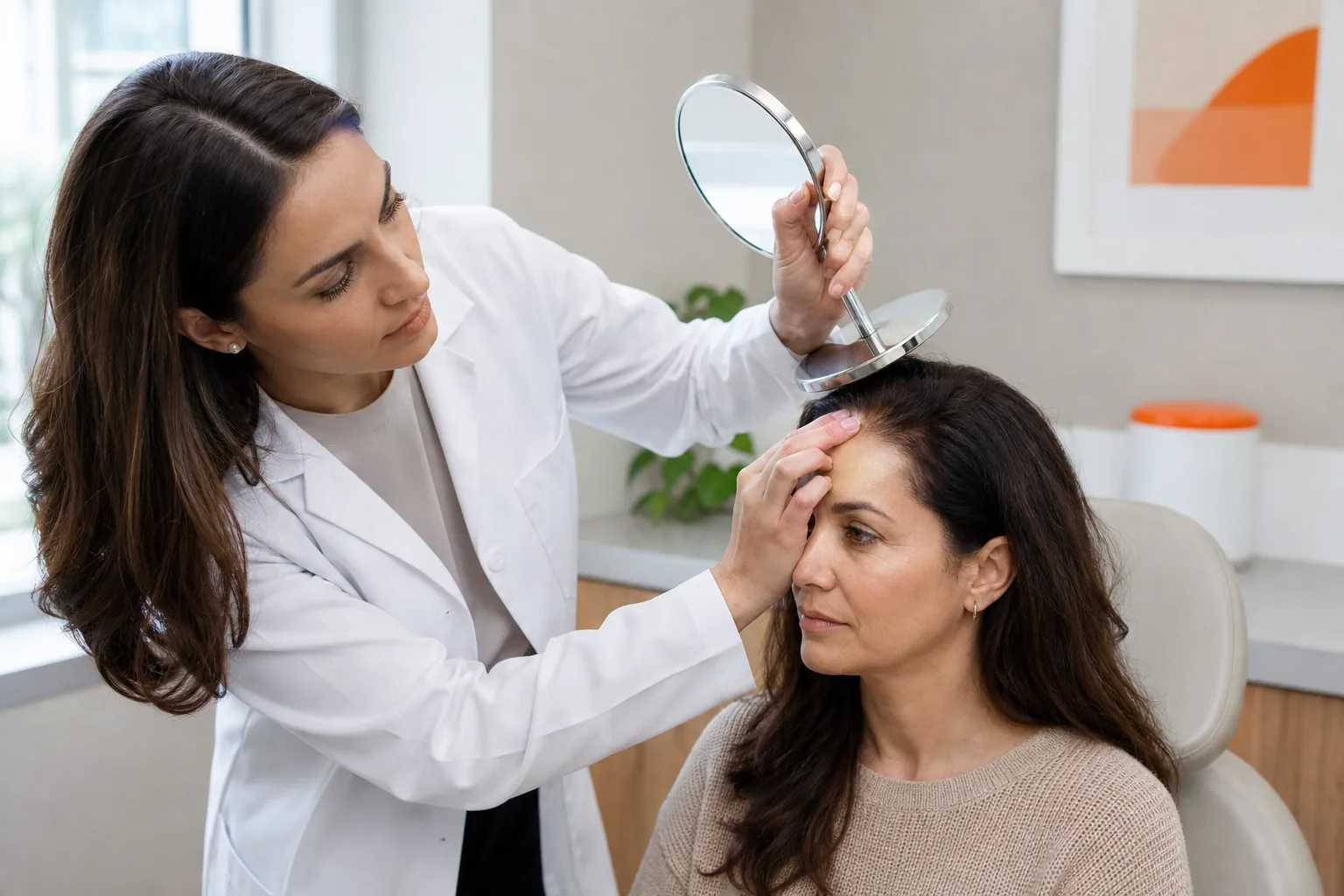
Seek medical advice promptly if hair loss is sudden or patchy, your eyebrows are thinning, or your scalp burns, hurts, or itches. Sudden severe symptoms beyond hair loss need urgent medical care.
What to Discuss With a Clinician Before Starting or Changing HRT
Start with the reason for considering HRT. If you have menopause symptoms, describe how they affect daily life. If hair loss is your only concern, ask whether an exam or referral to a dermatologist makes sense before considering hormone treatment.
Bring a short timeline of the hair change. Note whether the hair is shedding all over or thinning in a certain area. Include recent illness, stress, weight change, new medicines, and any change in hormone treatment. Photos taken over time may help you describe the pattern, but they can’t replace an exam.
Ask what each part of a proposed hormone plan is meant to address. If you have a uterus, ask whether a progestogen is needed with estrogen. Ask how the route and formulation fit your health history. If someone suggests changing a dose or switching to a compounded product for hair, ask what evidence supports that change and how your care would be monitored. Don’t adjust a prescription on your own.
Talk through risks that may matter in your case, including a history of blood clots, stroke, or breast cancer. The risk profile depends on the person and the treatment. You can also ask which changes should prompt a follow-up and when to review the plan.
Hair-focused treatments deserve their own discussion. Ask whether your pattern fits a treatment such as minoxidil, whether tests are appropriate, and what side effects to watch for. A clinician may also explain whether a light-based device or prescription medicine fits your diagnosis. Don’t stop an existing treatment without talking to its prescriber.
For questions about hormone care and possible side effects, PS Aesthetics Wellness + Skinbar’s overview of hormone therapy and breast tenderness may help you prepare. It’s still important to discuss your own symptoms and medical history with a clinician.
Key Takeaway:Make the treatment decision from a hair-loss diagnosis and your overall health, not from hair thinning alone.
Frequently Asked Questions
Can HRT regrow hair after menopause?
HRT hasn’t been shown to reliably regrow hair after menopause. HRT may be appropriate for some menopause symptoms, but a clinician should assess hair loss separately and discuss options that fit its cause.
Can testosterone therapy cause hair loss?
Testosterone therapy may worsen hair loss in some people, particularly when scalp follicles are sensitive to DHT. It shouldn’t be treated as a general hair treatment or a reason to change a prescription.
Should I start HRT just because my hair is thinning?
No, hair thinning alone isn’t a clear reason to start HRT. Hair loss can have several causes, and HRT has health risks that need individual review. Ask a clinician to assess the pattern and your health history first. If you also have menopause symptoms, discuss those separately when considering whether hormone therapy may suit you.
When should I see a doctor about hair loss?
See a clinician promptly if hair loss starts suddenly, appears in patches, affects your eyebrows, or comes with scalp pain, burning, or itching. These signs can point to causes that need assessment. Gradual thinning is also worth discussing if it persists or concerns you. A clinician can examine your scalp and decide whether testing or referral is appropriate.
Conclusion
HRT may affect hair, but current evidence doesn’t make it a reliable hair-loss treatment. Start with an assessment to identify the pattern and likely cause, then ask a clinician to weigh hair-focused care against your menopause symptoms and health history. PS Aesthetics Wellness + Skinbar offers hormone and wellness services in Edmond; an assessment can help clarify whether its care fits your needs.

Comments