


What Is RF Microneedling? Benefits and Risks
Updated: Aug 19
RF microneedling pairs tiny needles with radiofrequency heat to remodel collagen below the skin's surface. In Edmond, Morpheus8 gets much of the local attention, often for tightening and body contouring, while facial uses get less detail online. Here is how the treatment works, what it may improve, what recovery feels like, and when to think twice.
Table of Contents
How RF Microneedling Works
RF microneedling uses a handheld device with small needles. The needles enter the skin to a planned depth. Then the device sends radiofrequency energy through the needle tips into the dermis, the layer that holds much of the skin's collagen.
Microneedling relies on controlled micro-injuries to start the body's repair response. RF microneedling adds heat below the surface. That heat can tighten treated tissue and support collagen remodeling at a deeper level than needling alone. The exact effect depends on the device, needle depth, energy level, treatment area, and the skill of the person using it.
Think of it this way. The needles give the skin a repair signal. The RF energy adds a carefully controlled heat signal. A qualified provider adjusts both signals to match your skin and your goal.
Some devices use insulated needles that release energy near the tips rather than across the full needle shaft. This helps the provider target deeper tissue while limiting heat at the skin's surface. Energy and depth should be set for the area being treated. The face, neck, abdomen, and thighs do not need the same plan.
RF microneedling is different from a home roller. Medical devices can reach planned depths and deliver controlled energy. Sterile technique also matters because the treatment briefly disrupts the skin barrier. The basic microneedling process relies on tiny punctures that prompt a healing response, but adding RF makes the treatment more technical.
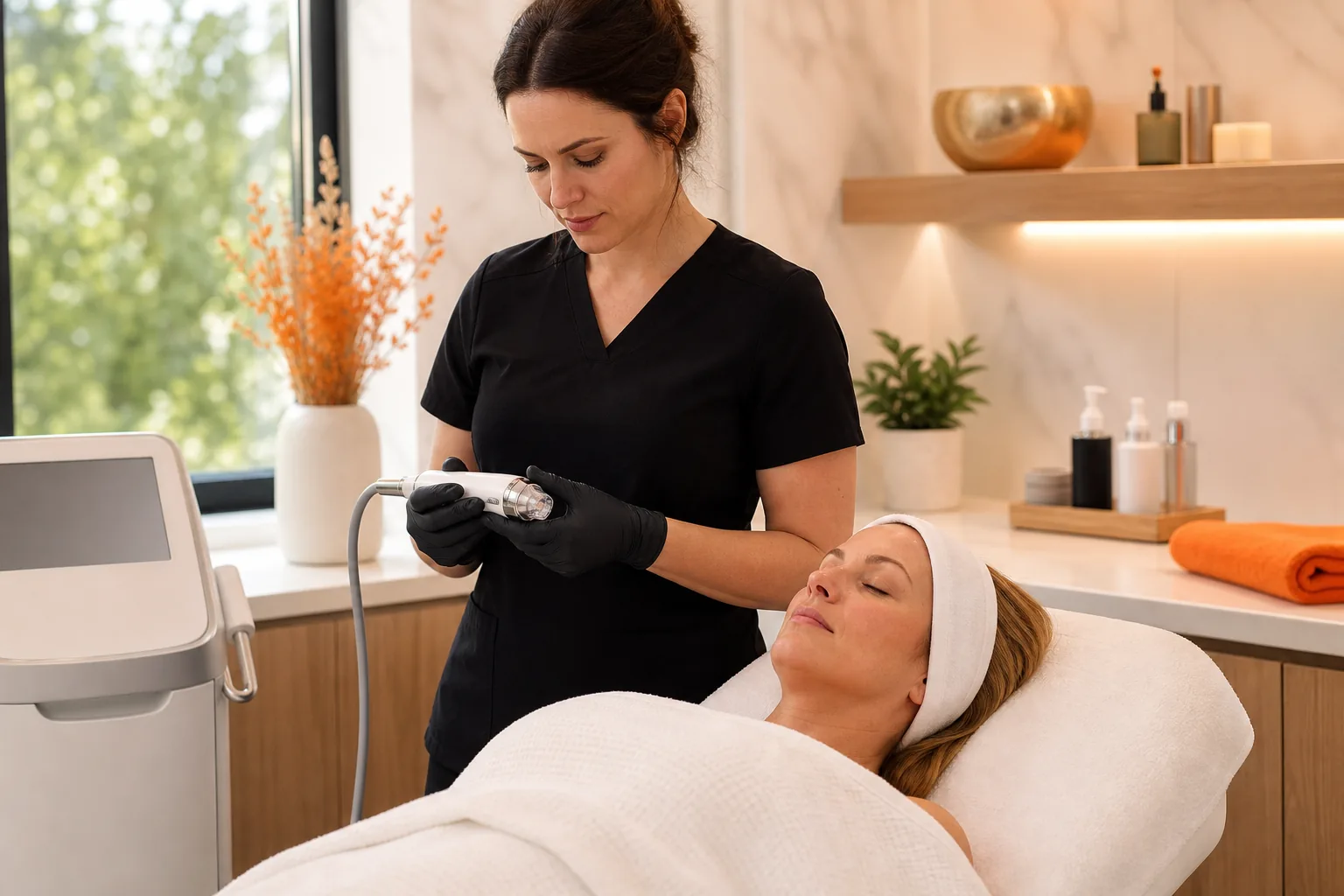
Local market research reviewed six Edmond-area entries on August 15, 2026. Four named Morpheus8, which shows how strongly that device shapes local marketing. Still, a device name does not replace a treatment plan. Ask what depth and energy will be used for your concern, and why.
Key Takeaway:RF microneedling combines controlled needle injury with radiofrequency heat to reach deeper skin layers and support collagen remodeling.
What Can RF Microneedling Treat?
RF microneedling may help with skin laxity, uneven texture, acne scars, fine lines, enlarged pores, and crepey skin. It can also be used on body areas where loose or uneven skin texture is a concern.
Facial treatment often focuses on texture and firmness. A provider may treat the cheeks, jawline, forehead, neck, or area around the mouth. Acne scars can need a different depth from fine lines. That is why a single setting for every patient makes little sense.
Body treatment is a major part of the local conversation. Edmond-area providers often describe Morpheus8 in terms of slimming, toning, tightening, and collagen support. Those claims should be discussed with care. RF microneedling may improve the look of skin and tissue firmness, but it is not a replacement for weight loss or surgery.
Other treatment areas may include the chest, arms, abdomen, hands, and above the knee. Stretch marks and crepey skin may also be discussed during a consultation. Results depend on the cause of the concern. A treatment that helps mild laxity may not correct a large amount of excess skin.
Medical writing on RF microneedling describes the treatment as a way to combine collagen induction with deeper thermal energy. Needle depth and energy can be adjusted for different skin concerns. That flexibility is useful, but it places more weight on provider judgment.
PS Aesthetics Wellness + Skinbar approaches the consultation as a skin plan rather than a device sale. Your goals, skin history, treatment area, and tolerance for downtime should shape the recommendation. If texture is your main concern, a treatment focused on texture may be enough. If laxity is the bigger issue, RF may make more sense.
Pro Tip:Bring one clear goal to your consultation, such as softer acne scars or firmer neck skin. A focused goal makes depth, energy, and session planning easier to discuss.
What Happens During and After a Treatment?
A typical session starts with a health review and skin check. Your provider should ask about active acne, cold sores, recent sun exposure, medicines, skin products, and past reactions. The area is cleaned before a topical numbing cream is used when appropriate.
Numbing time varies by protocol. Once the skin is ready, the provider passes the device over small sections. You may feel pressure, vibration, warmth, or brief prickling. The sensation can be stronger over bony areas or when deeper settings are used.
A session may take about 30 minutes to one hour, depending on the area and device. The treatment itself is only one part of the visit. Skin review and aftercare instructions deserve time too.
Right after treatment, skin may look red and feel warm, tight, or sunburned. Mild swelling is common. Pinpoint bleeding or tiny crusts can occur, especially with deeper work.
During the first few days, redness and swelling often settle. Dryness or light peeling may follow. Many people return to daily tasks within a day or two, but a stronger treatment may need more visible recovery time. Plan around the actual settings, not a general promise of zero downtime.
Use only the products your provider approves. Gentle cleansing, hydration, and sun protection are usually part of microneedling aftercare . Avoid picking at flakes. Pause retinoids, acids, scrubs, heavy makeup, strenuous exercise, saunas, and swimming until your provider says they are safe.
Early texture changes may show within a few weeks. Collagen remodeling continues for weeks or months, so a single session is not the whole result. Some providers recommend a series, but the spacing can vary widely. One reviewed source described three treatments four to six weeks apart, while another described two to three treatments with longer gaps. There is no universal schedule.
PS Aesthetics Wellness + Skinbar can help you plan treatment around work, travel, and sun exposure. That matters in Oklahoma, where outdoor time can make aftercare harder to manage.
RF Microneedling Benefits, Risks, and Who Should Avoid It
The main benefit is deeper collagen remodeling with limited surface disruption compared with some resurfacing treatments. Patients may see firmer skin, smoother texture, softened scars, or a more even look over time. The result is gradual. RF microneedling does not give the instant volume that a filler can provide.
It may suit someone with early laxity who wants more than a surface facial but does not want surgery. It can also fit someone whose acne scars remain visible after basic skincare. Body use may appeal to a person concerned with crepey skin on the abdomen, arms, or above the knee.
Risks include prolonged redness, swelling, bruising, infection, burns, scarring, and changes in skin color. Darker skin tones may face a higher risk of post-inflammatory hyperpigmentation after irritation or excess heat. Good settings and strict aftercare reduce risk, but they cannot remove it.
Tell your provider about a history of cold sores. Needling around the mouth can trigger a flare in some people. Also share every medicine and active skincare product you use. Blood-thinning medicines, recent tanning, and strong retinoids may change the timing or plan.
You may need to delay treatment if you have an active skin infection, open wound, severe inflammation, or a condition that slows healing. Pregnancy, immune problems, poor wound healing, and certain medicines call for a medical review before treatment. Your provider should decide whether treatment is suitable after reviewing your history.
Do not judge safety by the device brand alone. A well-known device still needs correct settings, clean technique, and a trained operator. The medical use of radiofrequency energy shows why heat control matters, even though cosmetic RF microneedling is a different procedure.
Ask these questions before booking:
Who will perform the treatment?
What depth and RF energy fit my concern?
How many sessions might I need?
What should I stop before treatment?
What symptoms mean I should contact the office?
A careful provider should answer without rushing you. If the plan sounds the same for every face and body area, ask for more detail.
RF Microneedling vs. Other Treatments
RF microneedling and other needle-based treatments both use controlled needle injury to support collagen repair. The key difference is heat. Needle-based treatments without RF energy create microchannels, while RF microneedling sends energy below the surface during the pass.
Treatment | Best fit | Main tradeoff |
Needle-based treatments | Fine texture concerns and mild scars | May need more sessions for laxity |
RF microneedling | Texture plus skin laxity | More heat, cost, and treatment planning |
Light-based treatments | Selected pigment, texture, or surface concerns | Recovery and pigment risk vary by treatment |
Injectables | Volume loss or movement-related lines | Does not replace skin remodeling |
Surgery | Significant excess skin or advanced laxity | Greater recovery and medical commitment |
A needle-based treatment may be the better value when texture is the only concern. RF may be worth considering when laxity or deeper acne scars are part of the picture. Light-based treatments work through light-based heat and may target a different layer or concern. Injectables change volume or muscle movement, not the same skin structure RF treats.
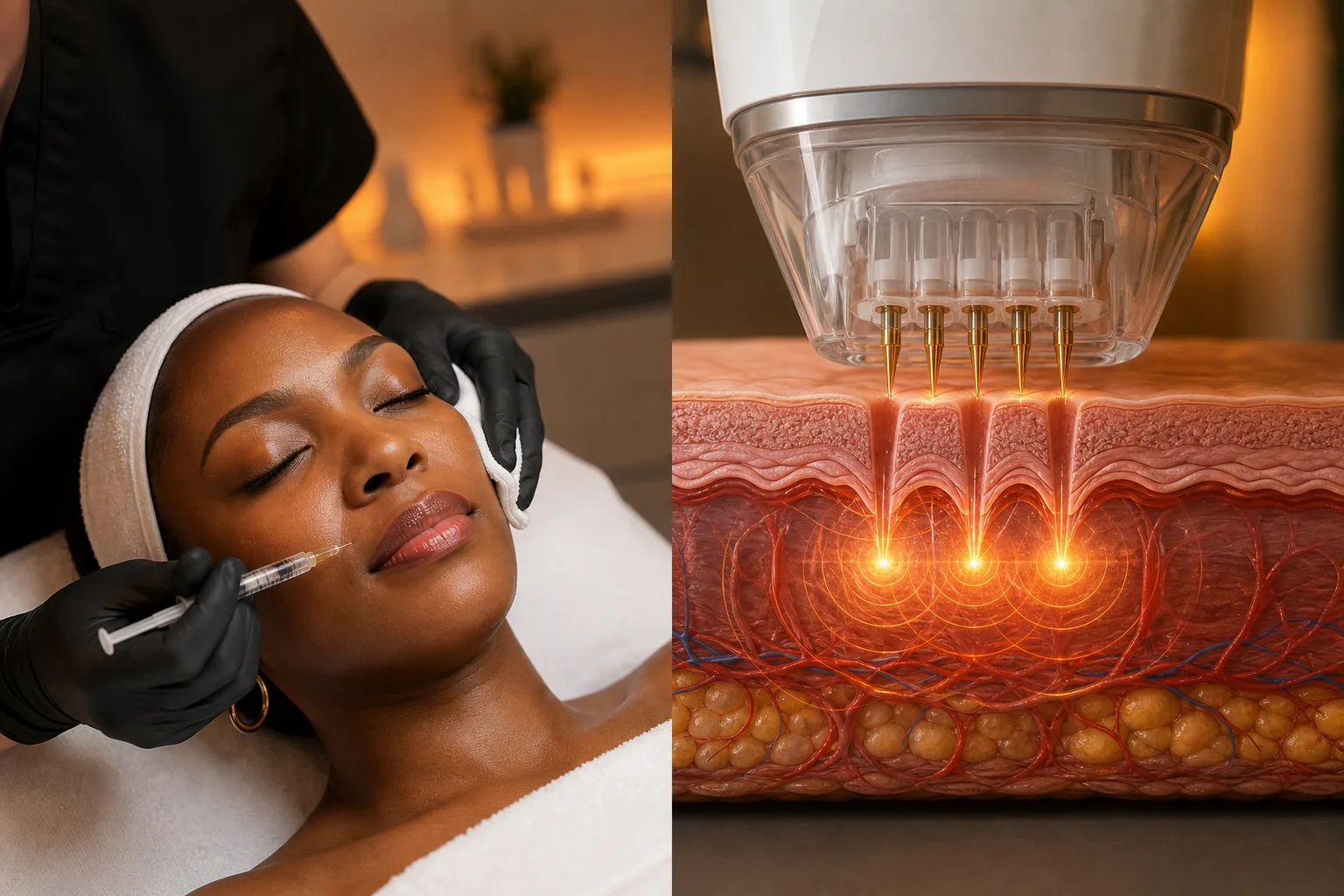
Some clinics pair microneedling with PRP, which uses a patient's own blood components. That is a separate add-on decision, not a standard part of every RF session. You can review the treatment flow in PS Aesthetics Wellness + Skinbar's guide to microneedling with PRP benefits and aftercare before asking whether it fits your goals.
The best choice comes down to the problem you want to change. If loose skin is the issue, a consultation should address tissue laxity. If dull texture is the issue, a simpler treatment may give you enough improvement with less downtime.
Frequently Asked Questions
What is RF microneedling?
RF microneedling is a cosmetic treatment that combines tiny needle punctures with radiofrequency heat. The needles enter the skin at a chosen depth, then deliver energy below the surface. This process aims to support collagen remodeling while improving the look of texture and laxity.
How long does RF microneedling take to heal?
Most visible reactions settle within several days, but full healing can take one to two weeks. Redness, warmth, tightness, swelling, dryness, or peeling may occur. Collagen changes take longer, often developing over several weeks or months. Your settings and treatment area affect the timeline.
Is RF microneedling painful?
RF microneedling usually feels like pressure, vibration, warmth, or prickling rather than sharp pain. A topical numbing cream can improve comfort. Deeper settings and bony areas may feel stronger. Tell your provider if the treatment feels too intense so the plan can be adjusted safely.
How many RF microneedling sessions do you need?
Many patients need a series, but there is no single session count for RF microneedling. The answer depends on your concern, skin response, device settings, and treatment area. Some protocols use two or three sessions. Ask for a written plan that explains spacing and how results will be reviewed.
Who should not get RF microneedling?
People with active skin infections, open wounds, severe inflammation, or poor healing may need to avoid RF microneedling. Pregnancy, immune conditions, cold sore history, recent tanning, and certain medicines also need review. A qualified provider should check your health history before recommending treatment.
Conclusion
RF microneedling can be a useful middle ground for skin texture and mild laxity when you want more than surface care but less than surgery. Start with a consultation at PS Aesthetics Wellness + Skinbar, ask for the planned depth, energy, session count, and aftercare, then decide with a clear view of recovery and risk.


Comments