


How to Get Rid of a Double Chin: Options
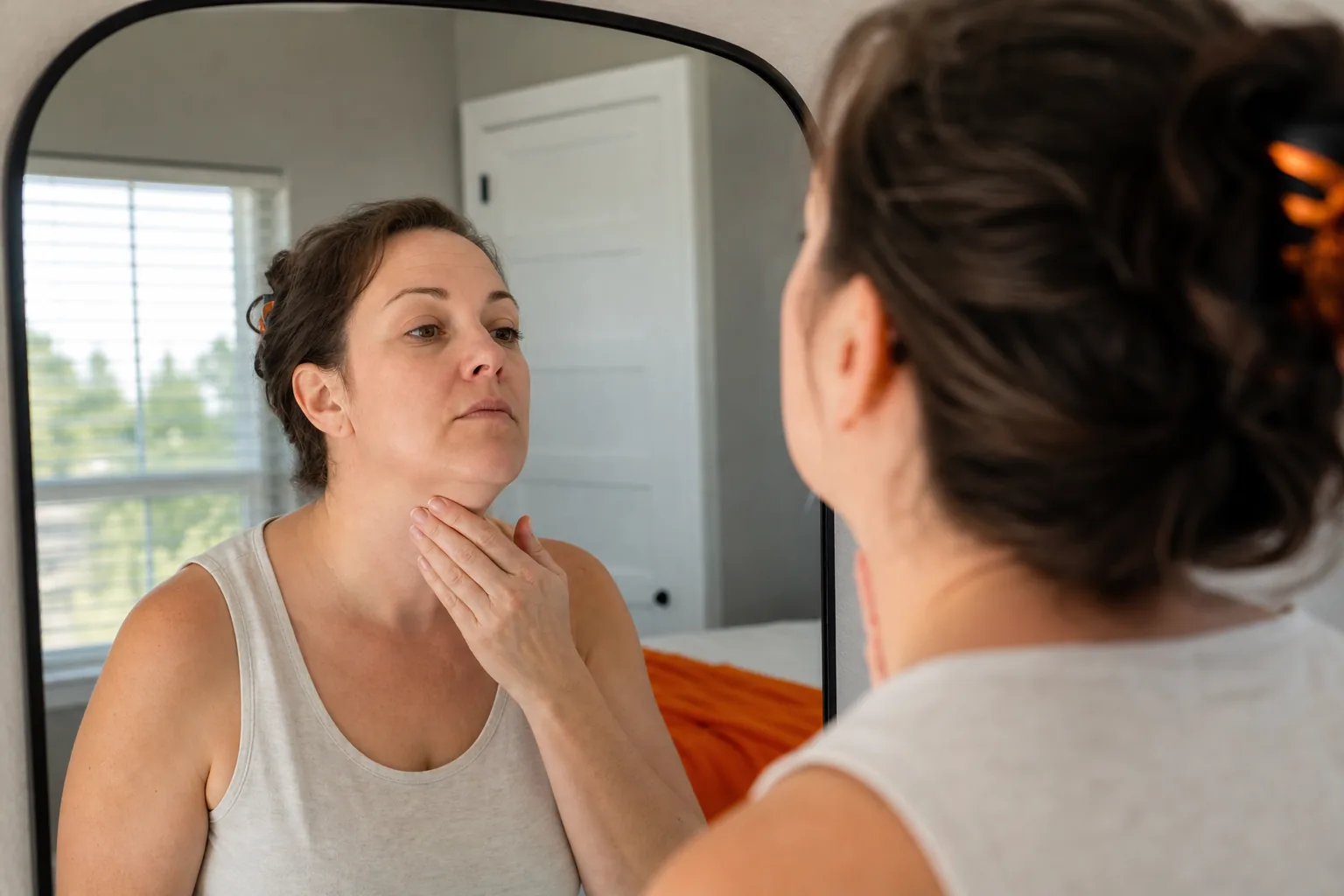
If you’re wondering how to get rid of a double chin, start by working out what may be shaping your chin and neck. Weight, inherited features, and loose skin can all play a part, and many treatments don’t come with clear measurements of how much change to expect.
Use these steps to weigh home habits against in-office care, then discuss your options with a qualified clinician.
Table of Contents
Step 1: Identify What May Be Contributing to Your Chin Profile
Goal:Separate fullness from fat, loose skin, facial structure, or the way your head and neck are positioned.
Look at your chin in a relaxed, straight-ahead position. Notice where the fullness sits and whether it changes when you adjust your posture. A photo taken from one angle can make the area look different, so don’t use a single image as your only guide.
A double chin often refers to fullness beneath the chin. It may be linked to excess weight, but weight isn’t the only factor. Inherited facial shape can affect the jawline, and loose skin can create a similar look. Genetics and loose skin can matter even when a person isn’t overweight.
Write down what you notice. Does the area feel like soft fullness, or does the skin seem loose? Has it changed with weight changes or over time? These are observations, not a diagnosis. A clinician can assess the tissue and explain what might be contributing.
Also note any jaw pain, clicking, trouble opening your mouth, or new neck symptoms. Those concerns need a health assessment, not just a cosmetic plan. Seek prompt medical advice for a new lump or sudden swelling. Get emergency care for severe or sudden trouble breathing or swallowing.
Milestone:You should have a short list of what you see, when it began, and any symptoms to mention.
Step 2: Start With Sustainable Weight-Management Habits
Goal:Support overall health without expecting a specific diet or exercise to remove fat from one small area.
If weight gain may be part of the picture, focus on habits you can keep up. Choose filling, nourishing meals that fit your needs. Build regular movement into your week, starting at a level that feels manageable. A short walk is a reasonable first step if you’ve been inactive, but check with a clinician before starting if you have a health concern.
There’s no reliable way to make the body lose fat from only the chin through a special food or exercise. Overall weight changes may affect facial fullness, but where your body stores fat varies. Avoid crash diets or very low food intake. A clinician or registered dietitian can help you set a plan that supports your health and fits your circumstances.
Facial movements such as chin lifts, jaw movements, or slow neck rolls may work the muscles in the area, but stronger muscles don’t automatically mean less fat.
If you try an exercise, use a gentle range of motion and stop if you feel pain, jaw strain, dizziness, or a new symptom. Avoid forceful pulling or pressing under your chin. A simple posture check can help you see how your head position changes your profile, but it won’t change the amount of fat under the skin.
PS Aesthetics Wellness + Skinbar offers medical weight-loss services in Edmond, Oklahoma. If you’re considering that support, talk with a qualified clinician about your health history and goals. The clinic’s guide to starting GLP-1 weight loss safely covers questions to raise with a provider.
Milestone:Choose one sustainable health habit to work on first. Don’t judge its value by a change in your chin alone.
Step 3: Match the Treatment Approach to the Concern
Goal:Discuss an approach that fits the tissue or feature you want assessed, rather than choosing a procedure by name.
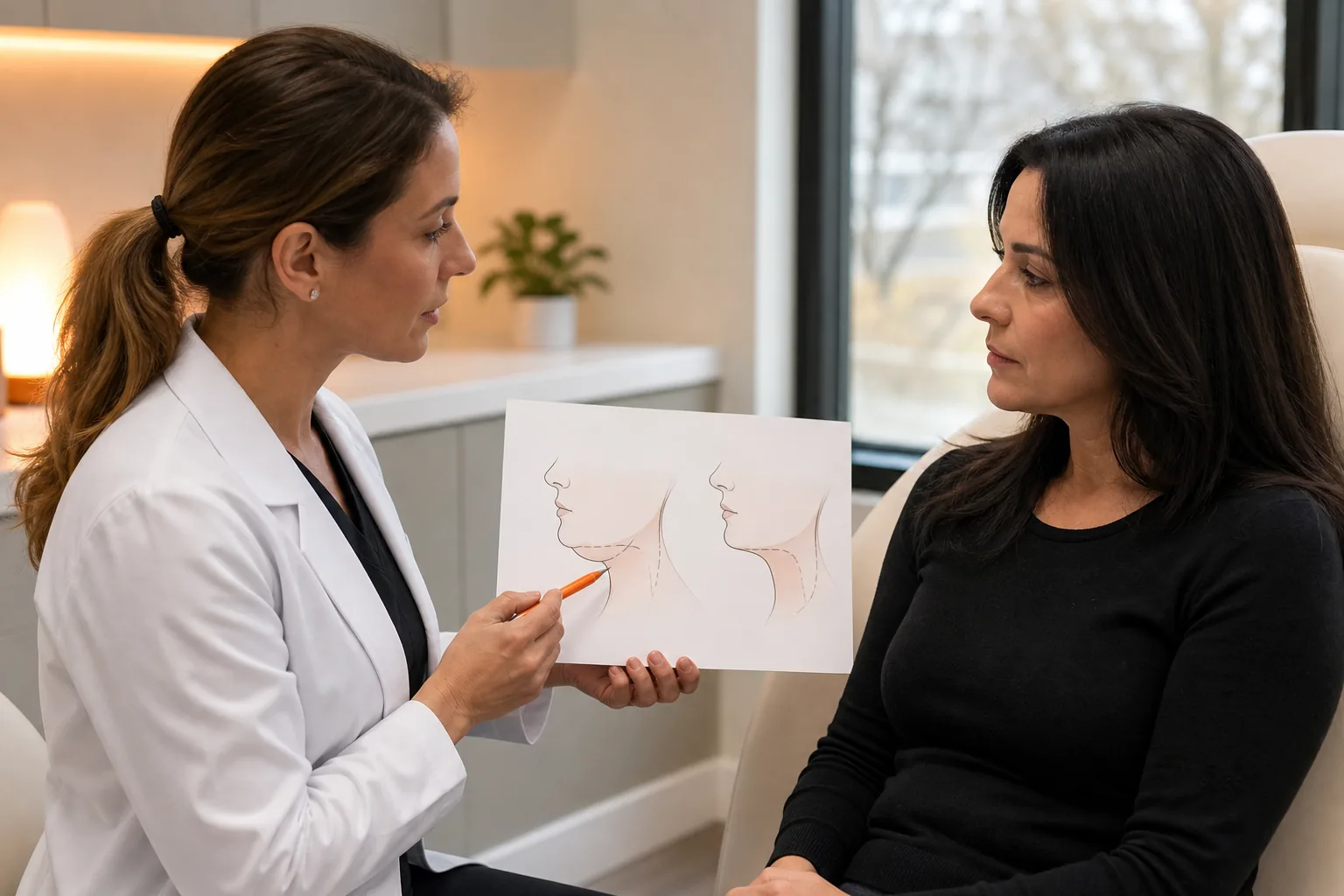
Different treatments aim at different concerns. A clinician may discuss options that target localized fullness, skin laxity, or facial contour. These approaches aren’t interchangeable, and a treatment meant to add definition won’t necessarily reduce fullness beneath the chin.
Non-surgical options described for this area include injectable treatments and devices that use cooling, radiofrequency, or ultrasound. Their proposed mechanisms differ. For example, some devices use controlled cooling , while radiofrequency and ultrasound approaches are described as aiming to tighten skin. The fact that a treatment has a proposed mechanism doesn’t tell you how much visible change you’ll get.
Surgical options may include liposuction or a neck lift. Surgery involves a different level of planning and recovery than an office-based treatment. Ask who will assess you, what the procedure would target, and what recovery may involve. A clinician may refer you to a surgeon if surgery is the option under consideration.
At-home facial massage and exercises may feel soothing, but don’t count on them to remove fat or tighten loose skin. Results across treatment options are hard to compare, and the amount of change varies from person to person. Ask what evidence applies to the exact method being proposed and how its limits affect your decision.
PS Aesthetics Wellness + Skinbar offers injectables and other aesthetic services in Edmond. Its medical aesthetic treatments are performed or overseen by Paige Schwab, APRN, FNP-BC, a licensed nurse practitioner. Its injectable treatments include neuromodulators to relax chin-forming muscles and dermal fillers to add targeted volume. If contour is your concern, the clinic’s chin filler guide can help you prepare questions about a treatment that adds facial volume.
Milestone:You should be able to say what the proposed option targets and what kind of change it is meant to address.
Step 4: Discuss Benefits, Risks, and Suitability With a Qualified Clinician
Goal:Get an assessment before deciding whether to try a procedure.
Bring your main concern and any changes you’ve noticed. Share relevant health conditions, medicines, allergies, prior procedures, and jaw or neck symptoms. Be clear about your comfort with cost, recovery time, and the possibility that a treatment may not create the change you want.
Ask the clinician to explain the plan in plain language. Which tissue or feature is the treatment meant to address? What evidence supports using it for that concern? What changes are reasonable to expect, and what can’t it do? Ask how the clinician will decide whether the option is suitable for you.
Discuss possible side effects and what the clinic does if you have a concern afterward. The risks depend on the method. Injections, devices, and surgery have different procedures and aftercare, so a general promise of “no downtime” or “no risk” isn’t a substitute for an individual explanation.
Ask for the full expected cost before you agree, including any planned follow-up care. Cosmetic care may not be covered by health insurance. If you’re comparing options, use the same questions for each: what it targets, what evidence applies, what recovery may look like, and what the total plan includes.
A consultation should leave you with a clear reason for the recommendation, or a clear reason to wait. You don’t need to choose a treatment before you understand the assessment.
Milestone:Move forward only when you understand the goal, the limits, the risks, and the likely recovery plan.
Step 5: Follow Aftercare Guidance and Know When to Seek Medical Advice
Goal:Follow instructions for the specific procedure and know which symptoms need attention.
After a procedure, use the written aftercare instructions from the clinician who treated you. Don’t copy a routine meant for another treatment. Ask what activity to pause, how to care for the area, when follow-up is due, and how to reach the care team with a concern.
After surgery, swelling, bruising, and discomfort can occur. The timing and recovery needs vary by procedure and person. Recovery instructions depend on the surgery, so ask your surgical team about follow-up and signs of infection.
Contact your treating team promptly if you notice worsening redness, warmth, drainage, fever, or pain around an incision. Ask for medical advice if a symptom feels severe, gets worse, or worries you. For severe or sudden trouble breathing or swallowing, seek emergency care.
Keep a simple record of the procedure date, the area treated, the instructions you received, and any effects you notice. At follow-up, discuss what changed and whether the next step should be to wait, adjust the plan, or seek another assessment. Don’t add another treatment on your own to try to speed up a result.
For injectable care, aftercare depends on the product and treatment area. PS Aesthetics Wellness + Skinbar has a dermal filler aftercare guide , but follow the instructions given for your own treatment.
Milestone:Keep your instructions and follow-up plan in one place, and ask the treating clinician when anything feels outside the expected course.
Frequently Asked Questions
Can exercises get rid of a double chin?
Exercises can work the muscles around your jaw and neck, but they can’t be counted on to remove fat beneath the chin. There’s no reliable way to target fat loss in one small area with a specific movement. If an exercise causes pain or jaw strain, stop and ask a clinician for advice.
Can weight loss reduce a double chin?
Weight loss may reduce facial fullness for some people if excess weight contributes to it, but changes vary. Genetics and loose skin can also affect the chin’s appearance. A sustainable health plan is a better starting point than a strict diet aimed at changing one area.
Why do I have a double chin if I’m not overweight?
A double chin can relate to inherited facial shape or loose skin, not only body weight. The appearance can also vary with head position and camera angle. A qualified clinician can assess what may be contributing and explain whether any treatment is suitable.
What treatments can address fullness under the chin?
Options discussed for the area include certain injectables, energy-based devices, and surgery. Each approach targets a different concern and has its own risks and recovery needs. Ask a qualified clinician what the proposed treatment targets, what evidence applies, and what results are realistic for you.
When should I see a doctor about chin or neck fullness?
See a doctor promptly for a new lump, sudden swelling, or symptoms such as pain or trouble swallowing. Seek emergency care for severe or sudden difficulty breathing or swallowing. A cosmetic consultation is not a replacement for medical assessment of a new or concerning symptom.
Conclusion
Start by identifying what may be shaping your chin profile, then choose any next step with a qualified clinician rather than relying on a promised result. If you’re in Edmond, PS Aesthetics Wellness + Skinbar can discuss whether an aesthetic option suits your concern. Bring your questions about the target, evidence, risks, cost, and aftercare to an assessment.

Comments