


Laser Skin Resurfacing for Acne Scars: Timeline
Wondering how long laser resurfacing takes to improve acne scars? The laser skin resurfacing for acne scars timeline has several stages: early redness, peeling, surface healing, then slower changes beneath the skin. The treatment type and depth shape your downtime, while collagen remodeling can keep going for months after your skin looks healed.
We analyzed 74 comments and questions from Reddit, YouTube and Quora about laser skin resurfacing timeline and found that 30% mentioned skin irritation.
Table of Contents
What Determines Your Recovery Timeline?
There isn’t one recovery clock for every laser treatment. The device, treatment depth, area treated, and your skin’s healing response all affect how long redness or peeling lasts. A lighter treatment and a deeper treatment can have very different recovery needs.
Some laser approaches leave the skin’s surface more intact while heating deeper tissue. Others remove some of the outer skin as they heat the layer below. Recovery can range from a few days to longer, depending on the treatment and your skin’s response.
These are general patterns, not a promise for your skin. Some treatments leave small areas untreated between treated columns, which can help the surface repair. Still, more intensive approaches can cause more discomfort and longer recovery than less intensive options. Treatment settings and the area being treated also matter. A provider should explain the planned depth before you set work or social plans.
For a closer look at how treatment depth shapes visible downtime, see our laser resurfacing downtime guide . It helps separate the days when you may prefer to stay home from the longer period when your skin is still settling.
Think of recovery as six stages: preparation, the immediate response, peeling, surface healing, lingering pinkness, and collagen remodeling. Some stages overlap. Your skin may close over before its color returns to normal, and early improvement doesn’t mean the deeper repair is finished.
Device settings and individual factors can change how much injury the skin receives. That’s one reason the same treatment name can lead to different recovery experiences. For additional information, see this resource .
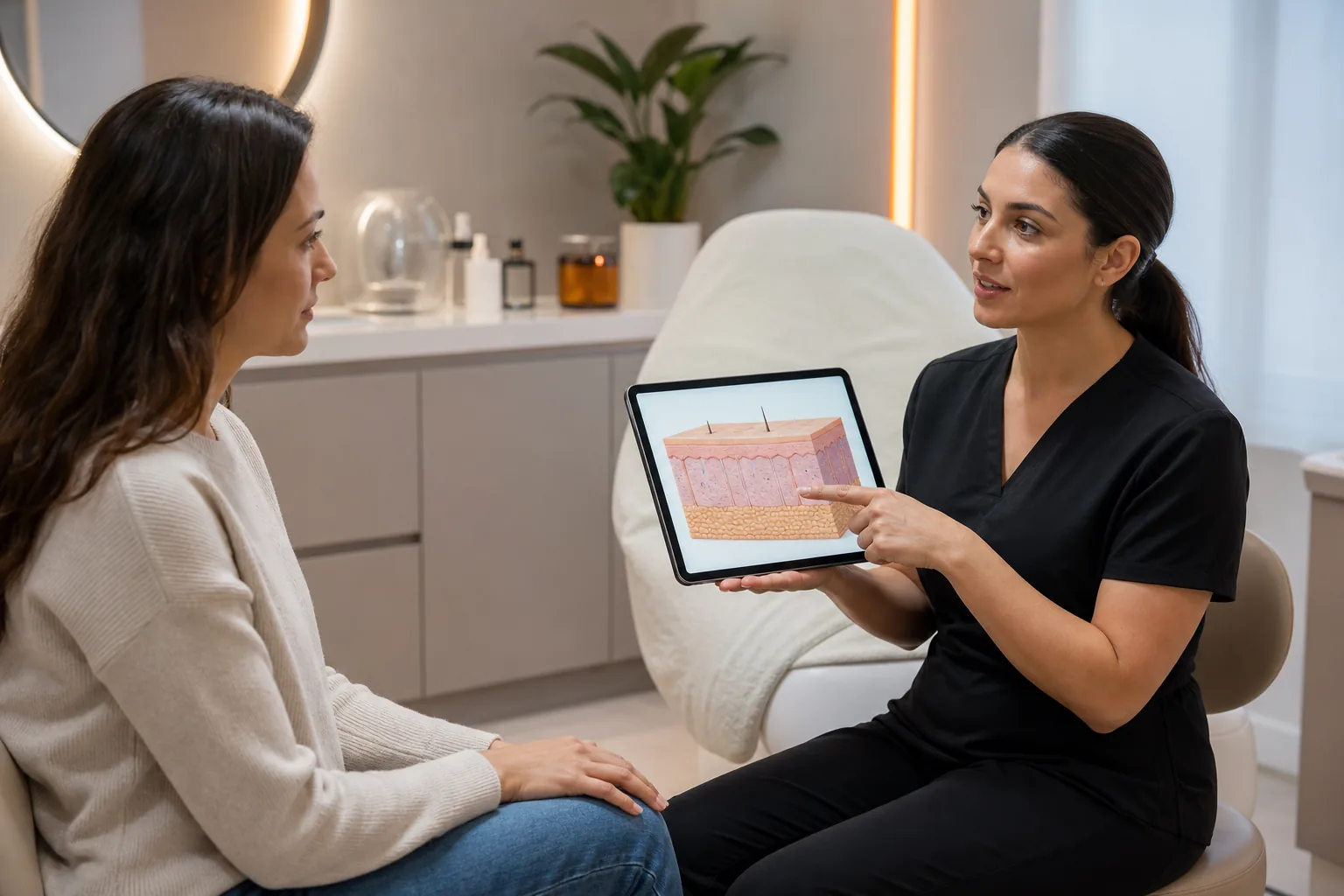
At PS Aesthetics Wellness + Skinbar in Edmond, laser skin resurfacing is part of the med spa’s service menu. A consultation can help you discuss scar type, skin tone, treatment depth, and the time you can set aside for healing before choosing a plan.
The First Days: Redness, Swelling, and Early Skin Care
Right after resurfacing, treated skin can look and feel like a sunburn. Warmth, redness, tightness, tenderness, and swelling are common early effects. Swelling may be most noticeable during the first one or two days, especially after a deeper treatment.
Laser resurfacing works by directing light into the skin. Ablative treatments remove outer layers and heat the dermis beneath them, prompting new collagen growth as the skin heals. Laser approaches can differ in how much skin they affect and their usual recovery time.
Peeling often starts around day three. It may continue through day five or six, though a deeper procedure can take longer to settle. Let loose skin shed on its own. Picking or rubbing can irritate new skin and may raise the risk of marks or uneven color.
Keep the routine plain while the surface heals. Follow the treating clinician’s instructions for gentle cleansing and use only the moisturizer or barrier-repair product they approve. Avoid scrubs, acids, retinoids, and other strong products until your provider says they’re safe to restart.
Sun care matters from the start. Keep out of direct sun as much as you can, then use mineral SPF when your clinician says sunscreen is appropriate for the healing surface. Freshly treated skin can be more sensitive, and sun exposure may worsen discoloration. A hat and shade can help limit exposure when you need to go outside.
Deeper treatments may need more involved wound care than lighter treatments. Don’t copy a home compress or vinegar-soak routine from a video unless your treating clinician has specifically told you to use it. The right care depends on the laser, depth, and condition of your skin.
For deeper resurfacing, plan for quiet time at home. Ask your provider when you can return to makeup, exercise, or your usual skincare routine; those dates depend on how your skin is healing.
Weeks 1-6: Healing and the First Changes in Acne Scars
By the end of the first week, many people see the surface calm down, but that doesn’t mean recovery is over. Pinkness, sensitivity, or uneven color may remain. With deeper CO2 treatments, redness can last beyond the first couple of weeks.
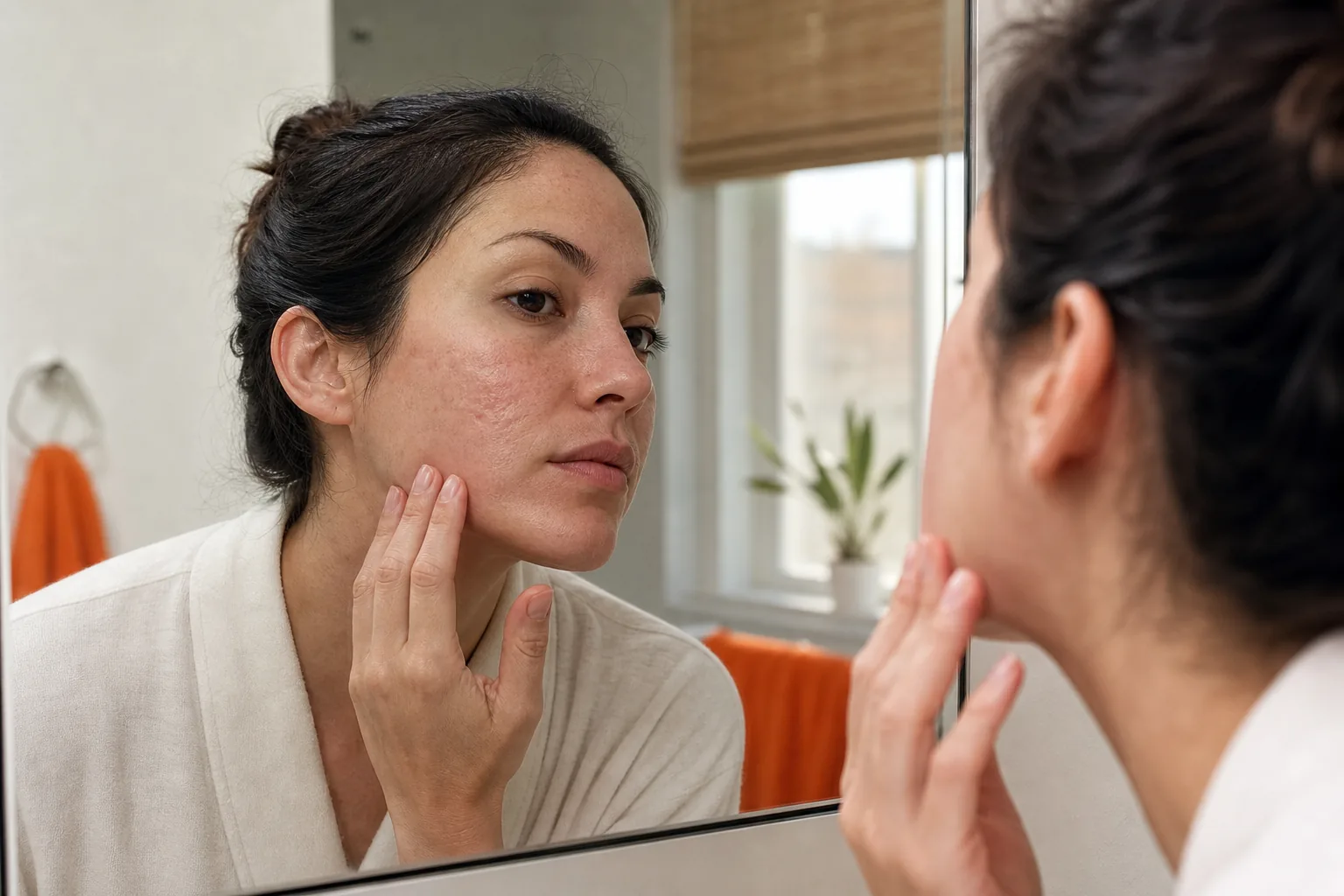
As the skin repairs itself, early texture changes may become easier to see. Some improvement can show within two to four weeks. Take photos in similar light and from the same angle if you want to compare changes fairly. A close-up taken in different lighting can make texture look better or worse than it is.
Acne scars don’t all respond in the same way. Atrophic scars create dents or pits, while hypertrophic scars are raised. Ice-pick scars are narrow and deep; rolling scars have sloped edges. Scar type, depth, and location help determine whether resurfacing alone makes sense. A laser may improve some surface texture, but it won’t necessarily address every scar’s underlying structure.
Keep following the after-care plan even when your face looks more settled. Continue gentle cleansing and moisturizer. Use sun protection as directed, and don’t restart strong actives just because peeling has stopped. The surface may look calm before it can handle your full routine.
Watch for a change in the wrong direction. Worsening pain, swelling that increases, or signs that concern you should be discussed with the treating clinician promptly. Infection, temporary discoloration, and scarring are possible risks of resurfacing, though the likelihood depends on the treatment and your skin.
At PS Aesthetics Wellness + Skinbar, all medical aesthetic treatments are performed or overseen by Paige Schwab, APRN, FNP-BC, a licensed nurse practitioner. During a treatment discussion, ask what changes are reasonable for your scar type and what symptoms should prompt a follow-up.
Months Later: Collagen Remodeling, Results, and Repeat Sessions
The skin’s surface can look healed well before the final result appears. Collagen remodeling continues below the surface for about three to six months. During that time, texture may keep changing, so a one-week check in the mirror won’t show the full effect.
Pinkness may also outlast peeling and tenderness. It can linger for weeks or months, and in some cases may last up to a year. That longer color phase doesn’t automatically mean the treatment failed. But ongoing redness or a new color change deserves a conversation with your provider, especially if it worsens.
Use the full recovery period as your frame for judging results. Early improvement may show in the first few weeks, while deeper changes take longer. The appearance of scars can improve without every mark disappearing. Set that expectation before treatment, and ask when your provider wants to assess the result.
Some people need more than one session. A stronger treatment may be planned as a single session, while a more gradual approach may involve repeat visits. The number depends on scar depth, the laser used, how your skin heals, and the change you’re seeking.
Sessions need time between them so your provider can assess healing before deciding on another treatment. Don’t schedule the next visit based only on a calendar or a photo. If your skin is still pink or sensitive, ask whether it needs more time before another session.
Laser resurfacing isn’t the only option for acne scars. A clinician may discuss approaches such as microneedling, chemical peels, or subcision, depending on the scar’s shape and depth. Treatment selection should be tailored to the individual. The goal is to match the method to the scar, not to assume one procedure suits every face.
If you’re weighing the time commitment alongside the financial one, our laser resurfacing cost guide for acne scars in Edmond covers local treatment planning. Ask for a full estimate that reflects the proposed number of sessions and follow-up care.
After the initial series, your clinician can help decide whether you need a touch-up or simply ongoing skin care. Keep sun protection in your routine. If your skin is prone to post-inflammatory hyperpigmentation, ask how treatment settings and after-care can lower that risk before proceeding.
FAQ
How long does it take to heal from laser resurfacing for acne scars?
Surface healing often takes about five to seven days after some fractional treatments, while more extensive ablative treatment may take 10 to 14 days. Less intensive treatments often have a shorter recovery. Redness or pinkness can remain after the surface heals, so ask your provider to explain both visible downtime and longer-term skin recovery.
When will I see results from laser treatment for acne scars?
Early changes may show within two to four weeks, but the final result takes longer. Collagen remodeling can continue for three to six months, and pinkness may last beyond that. Compare photos taken in similar lighting, and follow your clinician’s timing for a formal review rather than judging the outcome during the first week.
Can laser resurfacing make acne scars disappear?
Laser resurfacing can reduce the appearance of some acne scars, but complete removal isn’t guaranteed. Results depend on scar type, depth, skin tone, treatment settings, and healing. Deep or narrow scars may need a different or combined approach. Ask a qualified clinician to assess your scars and explain what improvement is reasonable.
How many laser sessions are needed for acne scars?
The number varies. Some plans use one stronger treatment, while others involve multiple sessions spaced apart so the skin can heal and the provider can assess progress. Scar depth and the treatment approach help shape the schedule. Ask how many visits may be considered and what would lead your provider to recommend another session.
Can laser resurfacing cause dark spots on darker skin?
Yes. Post-inflammatory hyperpigmentation is a known risk, and darker skin tones can be more prone to pigment changes after resurfacing. That risk doesn’t mean treatment is always unsuitable, but it calls for careful assessment and settings chosen for your skin. Discuss your skin tone and past pigment changes before treatment.
Conclusion
Plan for the surface to heal before you judge the result; collagen changes take months, and pinkness can last longer. Before booking, ask PS Aesthetics Wellness + Skinbar for a consultation about your scar type, likely downtime, and after-care plan. That conversation is the best next step toward a timeline that fits your skin and schedule.
Comments